
Table of Contents
- What Is Plantar Fasciitis and Why It Causes Pain
- How to Treat Plantar Fasciitis Pain: The Immediate Phase
- Plantar Fasciitis Exercises and Stretching for Pain Relief
- Best Shoes for Plantar Fasciitis UK: Choosing Proper Footwear
- Orthotics and Arch Support: When and How to Use Them
- How Long Does Plantar Fasciitis Last and What to Expect
- Advanced Treatment Options: Injections and Professional Therapy
- When to See a Doctor or Podiatrist for Heel Pain
How to Treat Plantar Fasciitis Pain: A Step-by-Step Guide
Last Updated: August 3, 2026
Plantar fasciitis causes sharp, stabbing heel discomfort that typically strikes first thing in the morning. At MMS Clinic, we work with patients daily managing this condition and seeking relief without prolonged NHS waiting times. Most cases respond well to conservative treatment when approached systematically. Below, we’ll walk you through evidence-based strategies to reduce pain, restore function, and prevent recurrence.
What Is Plantar Fasciitis and Why It Causes Pain
Plantar fasciitis occurs when the plantar fascia, a thick band of tissue running along the bottom of your foot from heel to toes, becomes inflamed or develops micro-tears. This tissue supports your arch and absorbs shock with every step. When irritated, the inflammation triggers characteristic heel pain that often feels worst after rest or first thing in the morning.
The pain typically stems from repetitive strain or sudden increases in activity. Common culprits include sudden weight gain, new exercise routines, prolonged standing, or wearing shoes with inadequate arch support. Biomechanical issues like flat feet or tight calf muscles increase your risk significantly. Morning stiffness is particularly frustrating, after hours of rest, the plantar fascia tightens, and your first steps stretch it suddenly, causing acute pain.
How to Treat Plantar Fasciitis Pain: The Immediate Phase
The first two weeks are critical. Your goal is to reduce inflammation and prevent further tissue damage by stopping aggravating activities while introducing gentle interventions that support healing.
Rest and ice therapy
Rest doesn’t mean complete immobilization. Reduce high-impact exercise like running or jumping, but maintain gentle movement like walking or swimming. Avoid activities that trigger sharp pain.
Ice therapy works best within the first 48 hours of acute flare-ups. Apply an ice pack wrapped in a thin towel to the heel for 15 minutes, three times daily. Rolling your foot over a frozen water bottle provides dual benefit: ice therapy plus gentle massage for 2-3 minutes, 2-3 times per day. When sitting or lying down, prop your foot up slightly above heart level to reduce swelling.
Many patients see faster improvement by icing immediately after activity rather than waiting for pain to peak. Set a timer for 15 minutes post-activity to catch inflammation early.
Over-the-counter pain relief
Non-steroidal anti-inflammatory drugs (NSAIDs) like ibuprofen or naproxen reduce both pain and inflammation. Take them as directed on the package, typically 400-600mg ibuprofen every 6-8 hours for short-term relief. NSAIDs work best when combined with rest and ice, not as a standalone solution.
Plantar Fasciitis Exercises and Stretching for Pain Relief
Stretching and strengthening exercises form the foundation of long-term recovery. Research shows consistent stretching reduces symptoms in 80% of cases within 12 weeks. Start gently and progress gradually, as pushing too hard too soon can trigger flare-ups.
Calf stretches and plantar fascia stretches
The calf stretch targets the muscle group that directly influences plantar fascia tension. Stand facing a wall, place one foot forward and one back. Keep your back heel flat on the ground and lean forward until you feel a gentle stretch in your back calf. Hold for 30 seconds, repeat 3 times, twice daily.
The plantar fascia-specific stretch is equally important. Sit in a chair and cross one leg over the opposite knee. Using your fingers, gently pull your toes back toward your shin until you feel a stretch along the arch of your foot. Hold for 30 seconds, repeat 3-5 times, twice daily. Many patients perform this stretch immediately after waking, which significantly reduces morning stiffness.
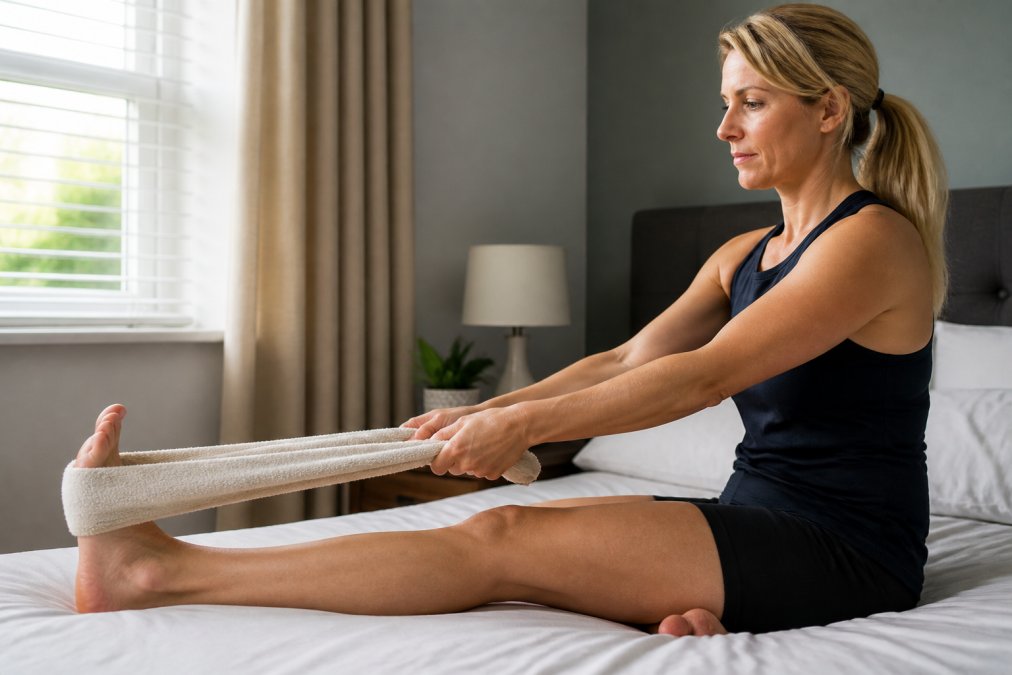
Strengthening exercises for arch support
Weak intrinsic foot muscles allow the arch to collapse slightly, increasing stress on the plantar fascia. Strengthening these muscles provides better support and reduces strain.
Short foot exercise: Sit or stand with feet flat. Without curling your toes, try to shorten the length of your foot by drawing the ball of your foot toward the heel. Hold for 5 seconds, repeat 10 times, twice daily.
Towel scrunches: Place a towel flat on the floor. Using only your toes, scrunch the towel toward you. Repeat until the entire towel is bunched up, rest, then spread it out and repeat 3 times.
Calf raises: Stand facing a wall for balance. Rise up on your toes, hold for 2 seconds, lower back down. Start with 10 repetitions and progress to 20-30. Do this 3-4 times weekly.
| Exercise | Duration | Frequency | Best Time |
|---|---|---|---|
| Calf stretch | 30 seconds × 3 | 2× daily | Morning and evening |
| Plantar fascia stretch | 30 seconds × 3-5 | 2× daily | Upon waking, before bed |
| Short foot exercise | 5 seconds × 10 | 2× daily | Any time |
| Towel scrunch | Until fatigued | 3 sessions | Evening or rest days |
| Calf raises | 20-30 reps | 3-4× weekly | Separate from stretching |
Consistency matters far more than intensity. Patients who perform stretches twice daily for 12 weeks see significantly better outcomes than those who exercise sporadically. Set phone reminders for morning and evening sessions to build the habit.
Best Shoes for Plantar Fasciitis UK: Choosing Proper Footwear
Footwear is one of the most underrated factors in plantar fasciitis recovery. You need shoes with three key features: firm heel counter, adequate arch support, and cushioning.
The heel counter should be rigid and supportive, not soft or collapsible. This stabilises your heel and reduces excessive motion that stresses the plantar fascia. Arch support is non-negotiable, look for shoes with built-in support that matches your foot type. Cushioning absorbs shock, reducing impact stress on the plantar fascia.
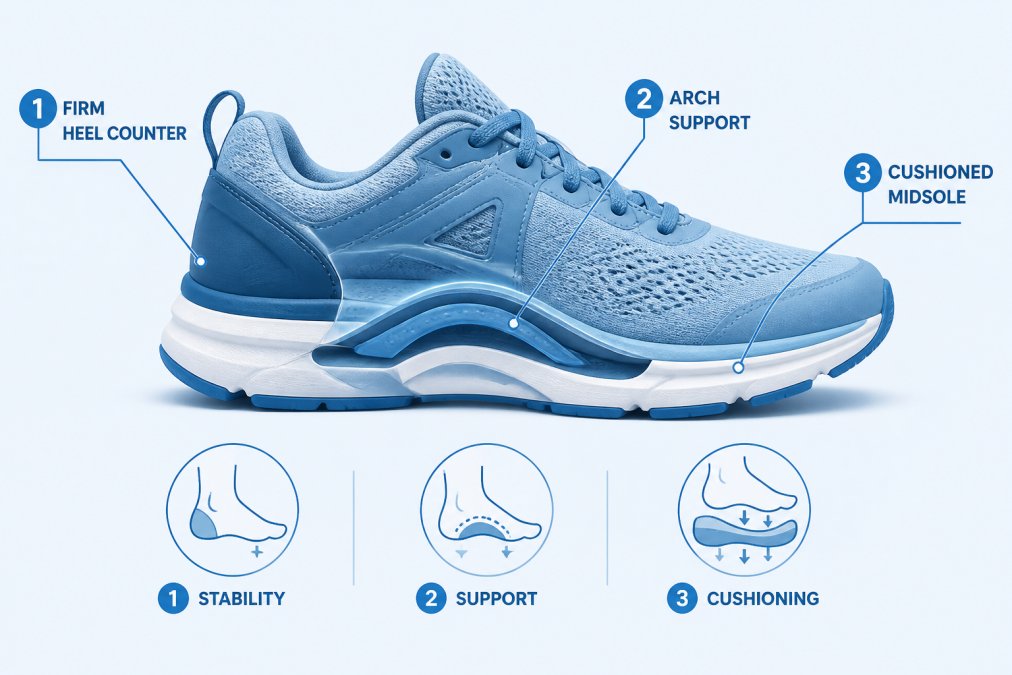
Avoid completely flat shoes, high heels over 5cm, worn-out trainers, and minimalist shoes. For the UK market, brands like New Balance, ASICS, and Brooks offer models specifically designed for plantar fasciitis. Consider wearing supportive shoes even indoors during acute phases, as many patients make the mistake of changing into slippers or going barefoot at home, which removes arch support precisely when the foot is most vulnerable.
Orthotics and Arch Support: When and How to Use Them
Orthotics, custom or off-the-shelf inserts, provide additional arch support and heel cushioning beyond what your shoes offer. Off-the-shelf orthotics work well for mild to moderate cases. Look for products specifically marketed for plantar fasciitis, which typically feature a firm arch support and deep heel cup. Many patients notice improvement within 3-5 days.
Custom orthotics, prescribed by a podiatrist or physiotherapist, offer individualised support based on your specific foot structure and gait. They’re worth considering if off-the-shelf options haven’t provided sufficient relief after 4 weeks.
Night splints hold your foot in a dorsiflexed position while you sleep, maintaining gentle stretch on the plantar fascia throughout the night and reducing morning stiffness by 40-50% in many patients. Heel cups or heel lifts reduce stress on the plantar fascia by slightly elevating the heel. Use them for 4-6 weeks, then gradually reduce reliance as your condition improves.
Orthotics work best when combined with stretching and strengthening exercises, not as a standalone solution. Patients who use orthotics but skip exercises often see symptoms return when they stop wearing them. Think of orthotics as support while you rebuild foot strength, not a permanent solution.
How Long Does Plantar Fasciitis Last and What to Expect
Most cases of plantar fasciitis resolve within 6-12 months with consistent conservative treatment. In the first 2-4 weeks, you’ll likely see modest improvement as acute inflammation reduces. Weeks 4-12 mark the most dramatic improvement window, pain typically reduces by 50-70% if you’ve been consistent with stretching, ice therapy, and proper footwear. By 12 weeks, 80% of patients report substantial improvement. Full resolution typically takes 6-12 months.
Factors that slow recovery include continuing high-impact activities too aggressively, poor footwear choices, inadequate stretching consistency, and underlying biomechanical issues. Post-recovery maintenance is essential, many patients who stop stretching and strengthening exercises after recovery experience recurrence within 6-12 months. Think of the exercises as a permanent lifestyle adjustment rather than temporary treatment.
Advanced Treatment Options: Injections and Professional Therapy
When conservative treatment hasn’t provided sufficient relief after 8-12 weeks, advanced options become relevant. These aren’t first-line treatments but valuable alternatives to surgery for appropriate candidates.
Corticosteroid injections for pain management
Corticosteroid injections deliver anti-inflammatory medication directly into the plantar fascia, providing more concentrated inflammation reduction than oral NSAIDs. The procedure takes 5-10 minutes and is performed under ultrasound guidance for accuracy. Pain relief typically begins within 48 hours and peaks at 2-3 weeks. Many patients experience 3-6 months of substantial relief. At MMS Clinic, corticosteroid injections for plantar fasciitis are available within days of consultation, performed by GMC-registered doctors using ultrasound guidance. Most patients return to normal activity immediately afterward, though strenuous exercise should be avoided for 48 hours. Injections work best when combined with ongoing stretching and strengthening exercises.
Shockwave therapy and other specialist treatments
Extracorporeal shockwave therapy (ESWT) uses high-energy sound waves to stimulate healing in the plantar fascia. Sessions last 20-30 minutes, typically performed weekly for 3-4 weeks. Approximately 60-70% of patients report meaningful improvement. ESWT works by stimulating tissue repair and promoting new blood vessel formation, making it particularly useful for chronic cases.
Physical therapy with a specialist physiotherapist provides individualised exercise programming, hands-on treatment like soft tissue mobilisation, and gait analysis. Surgery (fasciotomy) is rarely needed, fewer than 5% of plantar fasciitis cases require it.
When to See a Doctor or Podiatrist for Heel Pain
Self-care works for most cases, but certain situations warrant professional evaluation. See your GP if pain persists beyond 2 weeks despite rest, ice, and stretching; pain significantly limits daily activity; you notice swelling, redness, or warmth in your heel; or you have underlying conditions like rheumatoid arthritis or diabetes.
A podiatrist is particularly valuable if you have biomechanical issues, need custom orthotics, or want professional gait analysis. For patients in the Coventry and West Midlands region seeking faster access to specialist assessment, MMS Clinic offers private consultations without NHS waiting times. GMC-registered doctors can evaluate your condition, discuss whether corticosteroid injections or other advanced treatments are appropriate, and provide custom orthotic referrals. Online consultations are available for initial assessment, with face-to-face appointments at the Coventry clinic when hands-on examination is needed.
Red flags requiring urgent medical attention include severe sudden pain, inability to bear weight, signs of infection, or symptoms following trauma or injury.
Plantar fasciitis causes real disruption to daily life, but it’s one of the most treatable foot conditions when you approach it systematically. Most cases resolve completely with consistent stretching, proper footwear, and activity modification. If conservative treatment hasn’t delivered results after 8-12 weeks, advanced options like corticosteroid injections or shockwave therapy can accelerate recovery. At MMS Clinic, we specialise in rapid access to these treatments, with corticosteroid injections available within days, performed by GMC-registered doctors with ultrasound guidance, avoiding months of NHS waiting. Book a consultation today and take control of your heel pain.
Frequently Asked Questions
How do I know if I have plantar fasciitis or just general heel pain?
Plantar fasciitis typically causes sharp heel pain that is worst in the morning or after rest, then improves with activity. The pain often returns after prolonged standing or walking. General heel pain may feel different and have different triggers. A podiatrist or GP can diagnose plantar fasciitis through physical examination and, if needed, imaging. If your heel pain persists beyond two weeks or worsens, seek professional assessment to rule out other conditions.
What plantar fasciitis exercises work best on the NHS?
The NHS recommends stretching and strengthening exercises as first-line treatment. Key exercises include calf stretches, plantar fascia stretches (rolling a ball under your foot), and toe-curling exercises. Perform these daily, especially in the morning before getting out of bed. Your GP or NHS physiotherapist can provide a tailored exercise plan. Consistency matters more than intensity; most people see improvement after 4-6 weeks of regular exercise combined with other conservative treatments like rest and ice therapy.
How long does plantar fasciitis last if treated properly?
Most cases resolve within 6-12 months with conservative treatment including rest, stretching, ice therapy, and proper footwear. Some people recover faster, within 3-6 months, while others may take longer. The key is early intervention and consistent treatment. About 80-90% of people improve significantly without surgery. Your recovery timeline depends on the severity, how quickly you start treatment, and how well you follow the treatment plan. Persistent cases may benefit from specialist interventions like corticosteroid injections.
When should I see a GP or podiatrist about heel pain from plantar fasciitis?
See your GP if heel pain persists beyond two weeks despite rest and home care, if pain is severe and limits daily activities, or if you cannot put weight on your foot. A podiatrist can provide specialist assessment and treatment options like orthotics and injections. Early professional input can prevent chronic pain and reduce recovery time. Your GP can also rule out other causes of heel pain and refer you to NHS physiotherapy if appropriate, or recommend private treatment options if you prefer faster access to specialist care.
This article was written using GrandRanker