
Table of Contents
- Understanding Male Pattern Baldness
- The Early Signs of Male Pattern Baldness You Shouldn’t Ignore
- Stages of Male Pattern Baldness: How It Progresses
- Why Early Intervention Matters
- When to See a GP for Hair Loss
- Hair Loss Treatments for Men: What Works
- The Psychological Impact of Hair Loss
- Conclusion
Last Updated: August 15, 2026
Understanding Male Pattern Baldness
Male pattern baldness, or androgenic alopecia, is the most common form of hair loss in men. It occurs when hair follicles become progressively smaller due to genetic sensitivity to dihydrotestosterone (DHT), a hormone derived from testosterone. This process, called follicle miniaturization, causes hairs to shed prematurely before reaching full length.
Early recognition of male pattern baldness is crucial, as early intervention can slow progression and sometimes help regrow lost hair. The key difference between normal shedding and pattern baldness lies in the distinctive pattern of loss. Whilst most people shed 50-100 hairs daily, pattern baldness creates visible thinning over time that differs from natural variation.
The Early Signs of Male Pattern Baldness You Shouldn’t Ignore
Early signs of male pattern baldness develop gradually, which is why many men miss them until changes become obvious. Recognising these subtle shifts gives you the best chance to explore treatment before extensive loss occurs.
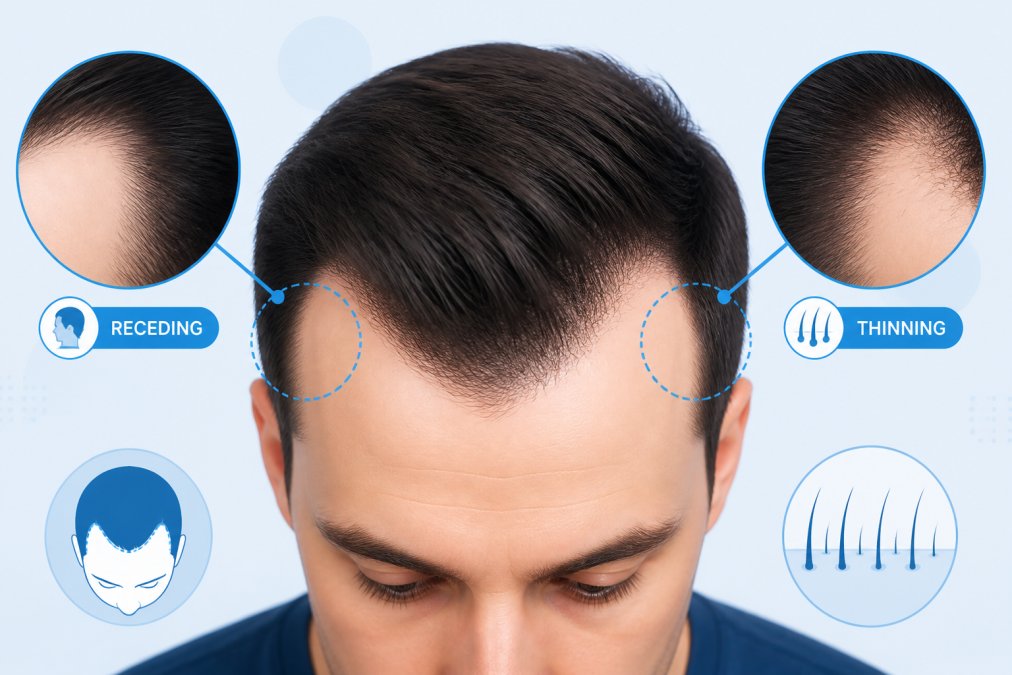
Changes at the Hairline
One of the first places to notice early signs is your hairline. Many men experience a receding hairline where the hairline gradually moves backward from the temples, typically beginning at the temples first and creating an "M" shape when viewed from above. Look for a widening part line or a less defined hairline than before.
Early intervention at this stage is particularly effective. If you spot changes within the first year or two of recession, you have more treatment options available.
Thinning at the Crown
The crown is another common area where early signs appear. You might notice slightly more scalp shine than before, or that your hair doesn’t have the same fullness it once did. Pay attention to how your crown looks in natural daylight, which reveals scalp visibility more clearly than dim lighting.
The crown is particularly vulnerable because hair follicles in this area are genetically predisposed to respond to DHT. If male pattern baldness runs in your family, your crown may be one of the first areas affected.
Increased Hair Shedding
A noticeable increase in hair shedding is often one of the earliest signs. You might find more hairs in your shower drain, on your pillow, or in your comb than previously. The key is whether the shedding is sudden or gradual and accompanied by other visible changes.
Not all increased shedding indicates male pattern baldness. Stress, nutritional deficiencies, or scalp conditions can also cause temporary hair loss. However, if increased shedding coincides with hairline recession or crown thinning, the pattern suggests androgenic alopecia may be developing.
Changes in Hair Texture and Density
As male pattern baldness progresses, individual hairs become finer, shorter, or more brittle. Miniaturized follicles produce thinner, shorter hairs that don’t grow to full potential length. Your overall hair density will decrease, and your hair may feel less full or require different styling to cover thinning areas.
Comparing current hair texture to photos from a few years ago often makes these changes more obvious.
Stages of Male Pattern Baldness: How It Progresses
Understanding the stages of male pattern baldness helps you recognise where you are in progression and why early intervention matters. The Norwood Scale classifies male pattern baldness severity from minimal hair loss to extensive baldness.
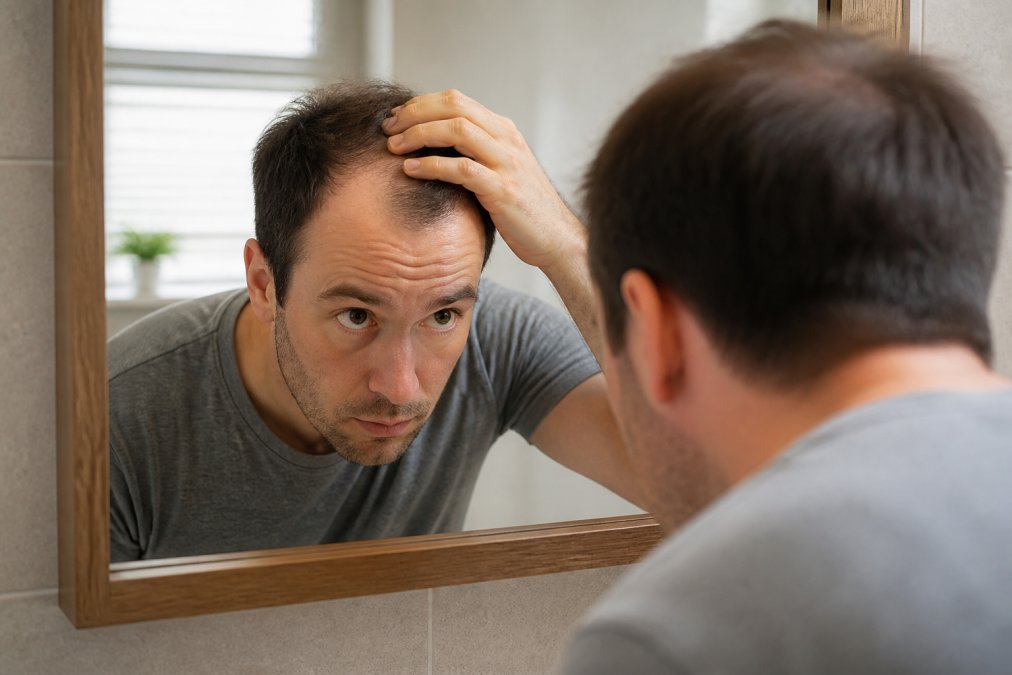
Stage 1 represents normal hair with no visible loss. Stage 2 involves minor recession at the temples or widened part line. Stage 3 shows more noticeable recession or crown thinning visible to others. Stage 4 involves significant recession and/or crown thinning with a clear band of fuller hair remaining between the two areas. Stages 5-7 represent increasingly severe hair loss, eventually resulting in extensive baldness.
The critical window for intervention is typically Stages 2 and 3. At these stages, you still have substantial hair remaining, and treatments are most effective at slowing or stopping progression.
The earlier you recognise the stages of male pattern baldness, the more treatment options are available to you. Stages 2 and 3 represent the optimal window for intervention.
Why Early Intervention Matters
Early intervention offers several meaningful advantages. First, treatments are significantly more effective at slowing hair loss when started early, before extensive follicle miniaturization has occurred. Second, early treatment can sometimes help regrow lost hair by reviving miniaturized hairs that are still present. Third, waiting until hair loss becomes severe limits your options to cosmetic solutions like hair transplants.
Many men delay seeking help hoping hair loss will stop on its own. This delay costs valuable time, as the longer you wait, the more follicles progress through miniaturization and the harder it becomes to reverse the process.
Delaying assessment and treatment when you notice early signs of male pattern baldness means missing the window when interventions are most effective. Hair loss typically doesn’t stop without treatment.
When to See a GP for Hair Loss
You should see a GP if you notice any early signs of male pattern baldness. Your GP can take a medical history, examine your scalp, and determine whether you’re experiencing male pattern baldness or another form of hair loss. They can also discuss your family history, as genetics play a significant role in androgenic alopecia.
A GP can refer you to a dermatologist if needed, though many GPs are experienced in diagnosing and managing male pattern baldness themselves. Private clinics like MMS Clinic also offer discreet assessment and treatment, with faster appointments and no NHS waiting list.
The assessment typically involves examining your scalp, discussing when you first noticed changes, and reviewing your family history. Blood tests are rarely necessary for male pattern baldness diagnosis.
:::pro-tip
When you see your GP, bring photos showing your hairline and crown from several months or years ago. This helps demonstrate the pattern and rate of change.
:::
Hair Loss Treatments for Men: What Works
Several evidence-based treatments can slow hair loss or promote regrowth in male pattern baldness. The most commonly prescribed options are topical minoxidil and oral finasteride.
Minoxidil is a topical treatment applied directly to the scalp, typically twice daily. It extends the growth phase of the hair cycle and improves blood flow to follicles. Many men see visible results within 3-6 months of consistent use. Minoxidil is available over the counter and is relatively affordable.
Finasteride is an oral medication that reduces DHT levels by inhibiting the enzyme 5-alpha reductase. It requires a prescription and is typically taken once daily. Results usually become apparent after 3-6 months of use, and continued treatment is necessary to maintain benefits.
Both treatments work best when started early, ideally at Stage 2 or 3. Combining minoxidil and finasteride often produces better results than either treatment alone. Individual responses vary considerably; some men see dramatic improvements, whilst others experience modest slowing of hair loss.
Other options include low-level laser therapy, though evidence is mixed. Hair transplantation is a surgical option for men with significant hair loss who want a permanent solution, though it’s typically considered after medical treatments have been optimised.
A GP or dermatologist can help determine which treatment approach is most appropriate based on your age, stage of hair loss, medical history, and goals. At MMS Clinic, our discreet men’s hair loss service includes medical assessment and prescription treatment options tailored to your specific situation.
The Psychological Impact of Hair Loss
The psychological impact of male pattern baldness is often underestimated. Hair loss can affect self-confidence, body image, and emotional wellbeing, particularly for men who experience it at a young age.
Research shows that men experiencing male pattern baldness report lower self-esteem, increased anxiety in social situations, and reduced quality of life. The emotional response to hair loss is valid and common. Seeking treatment early can help mitigate psychological distress by giving you a sense of control and agency.
Support from partners, friends, or family can also help. If hair loss is significantly affecting your mental health, speaking with a counsellor or therapist can provide valuable support alongside medical treatment.
Hair loss doesn’t have to progress unchecked. If you’ve noticed any early signs of male pattern baldness, the time to act is now. Early assessment and treatment offer your best chance of slowing progression and potentially regaining lost hair. MMS Clinic offers discreet, doctor-led assessment and prescription treatment for men’s hair loss, with appointments available face-to-face in Coventry or online across England. Book a free discovery call to discuss your hair loss concerns with a GMC-registered doctor and explore treatment options tailored to your situation.
| Early Sign | What to Look For | Timeline | Action |
|---|---|---|---|
| Receding hairline | Widening temples, M-shaped hairline | Months to years | Monitor and photograph |
| Crown thinning | Increased scalp visibility at back of head | Months to years | Compare lighting conditions |
| Increased shedding | More hair in drain, pillow, comb | Weeks to months | Track for 2-4 weeks |
| Hair texture changes | Finer, shorter, thinner individual hairs | Months to years | Compare to old photos |
| Density loss | Hair feels less full, styling becomes harder | Months to years | Assess with natural light |
Frequently Asked Questions
How can I tell if male pattern baldness is starting?
Early signs of male pattern baldness include a receding hairline, thinning at the crown, or widening of your parting. You might notice more hair in your shower drain or on your pillow than usual. The hairline typically recedes from the temples first, creating an M-shape. Hair strands may become finer and shorter before they fall out. If you're noticing these changes, a GP or trichologist can assess whether it's androgenic alopecia and discuss treatment options.
At what age does male pattern baldness typically start?
Male pattern baldness can begin at any age after puberty, though it becomes more common as men get older. Some men notice early signs in their 20s or 30s, whilst others don't experience noticeable hair loss until later in life. The progression depends on genetics and hormonal sensitivity. If your father or grandfather experienced early hair loss, you're more likely to follow a similar pattern. Early intervention when you first notice signs can help slow progression.
What causes male pattern baldness?
Male pattern baldness, or androgenic alopecia, is caused by a combination of genetic predisposition and sensitivity to dihydrotestosterone (DHT), a hormone derived from testosterone. If you inherit genes that make your hair follicles sensitive to DHT, those follicles shrink over time in a process called follicle miniaturization. This shortens the hair's growth phase and produces thinner, shorter hairs until the follicle stops producing visible hair. Your family history is the strongest predictor of whether you'll develop pattern baldness.
Can early signs of male pattern baldness be reversed?
Some treatments can slow hair loss and, in some cases, regrow hair if caught early. Topical treatments like minoxidil and oral medications like finasteride work best when started at the first signs of thinning, before too many follicles have stopped producing hair. Once a follicle has completely stopped producing hair, it cannot be reactivated. This is why early intervention is important, the sooner you seek treatment, the better your chances of preserving existing hair and potentially regrowing some. A GP can discuss which treatment is right for you.
This article was written using GrandRanker