
Table of Contents
- Why Restrictive Diets Fail and What Works Instead
- Understanding the Foundations of Sustainable Weight Loss
- Mindful Eating for Weight Loss: Building a Healthier Relationship with Food
- Portion Control Without Counting Calories
- Physical Activity and Lifestyle Modification for Weight Management
- Sustainable Weight Loss Tips: Sleep, Stress and Long-Term Adherence
- Setting Realistic Goals and Recognising Non-Scale Victories
- Getting Professional Support for Weight Management
Last Updated: August 8, 2026
Why Restrictive Diets Fail and What Works Instead
Most people regain weight within a year of restrictive dieting because restriction creates psychological pressure that eventually breaks. You eliminate food groups, count obsessively, or follow rigid plans. Willpower carries you through initially, but stress, social events, and fatigue cause the structure to collapse.
How to manage weight loss without restrictive diets means shifting from deprivation to balance. Instead of fighting hunger and cravings, you work with your body’s natural signals. Instead of eliminating foods, you learn portion awareness and build sustainable habits. Research is clear: people who lose weight and keep it off aren’t following extreme diets. They’re making behavioural changes that become part of everyday life.
At MMS Clinic, we’ve seen the same pattern repeatedly: initial success followed by burnout and regain. That’s why our medically supervised weight loss programme focuses on sustainable lifestyle modification rather than temporary restriction. The goal isn’t willpower. It’s building a relationship with food and movement that works long-term.
Restrictive diets fail because they rely on willpower alone. Sustainable weight loss comes from behavioural change, balanced nutrition, and working with your body’s natural signals rather than against them.
Understanding the Foundations of Sustainable Weight Loss
Sustainable weight loss rests on one foundation: a caloric deficit. This doesn’t mean starving yourself or obsessing over every calorie. It means consuming slightly fewer calories than your body burns over time. A deficit you can maintain for months is infinitely more valuable than a severe one you can only sustain for weeks.
Aiming for 0.5 to 1 kilogram per week is realistic and sustainable. Faster losses often come from water and muscle loss, not fat loss, and are harder to maintain.
Caloric deficit without deprivation
A caloric deficit doesn’t require elimination. You don’t need to give up bread, pasta, or dessert. You need to eat them in amounts that fit within your overall energy balance. When you stop labelling foods as "forbidden," the psychological pressure around eating decreases.
The practical approach: eat the foods you enjoy, just in slightly smaller portions. Add more vegetables and protein, which are filling and nutrient-dense. Drink water before meals. Eat slowly. These simple shifts create a deficit without feeling like deprivation.
One common mistake is underestimating portion sizes. The plate method, half your plate vegetables, a quarter protein, a quarter carbohydrates, helps without requiring calorie counting.
The role of balanced nutrition and nutrient density
What you eat matters as much as how much you eat. A meal high in refined carbohydrates and low in protein leaves you hungry two hours later. A meal with protein, fibre, and healthy fats keeps you satisfied for hours.
Nutrient-dense foods, vegetables, fruits, whole grains, lean proteins, legumes, provide vitamins, minerals, and fibre. When you prioritise nutrient density, you naturally eat fewer total calories because you’re more satisfied.
Protein is particularly important during weight loss because it preserves muscle mass, increases satiety, and has a higher thermic effect than carbohydrates or fat. Include healthy fats from olive oil, nuts, and fatty fish. Choose whole grains over refined ones. These are strategic choices that make your deficit easier to maintain.
Track your food for one week without changing anything. This reveals your actual eating patterns. Most people are shocked by portion sizes and snacking frequency. Simply noticing without judgment often leads to natural adjustments.
Mindful Eating for Weight Loss: Building a Healthier Relationship with Food
Mindful eating isn’t about willpower. It’s about awareness. When you eat on autopilot, scrolling, at your desk, or grazing from the packet, you disconnect from your body’s hunger and fullness signals and eat past satisfaction.
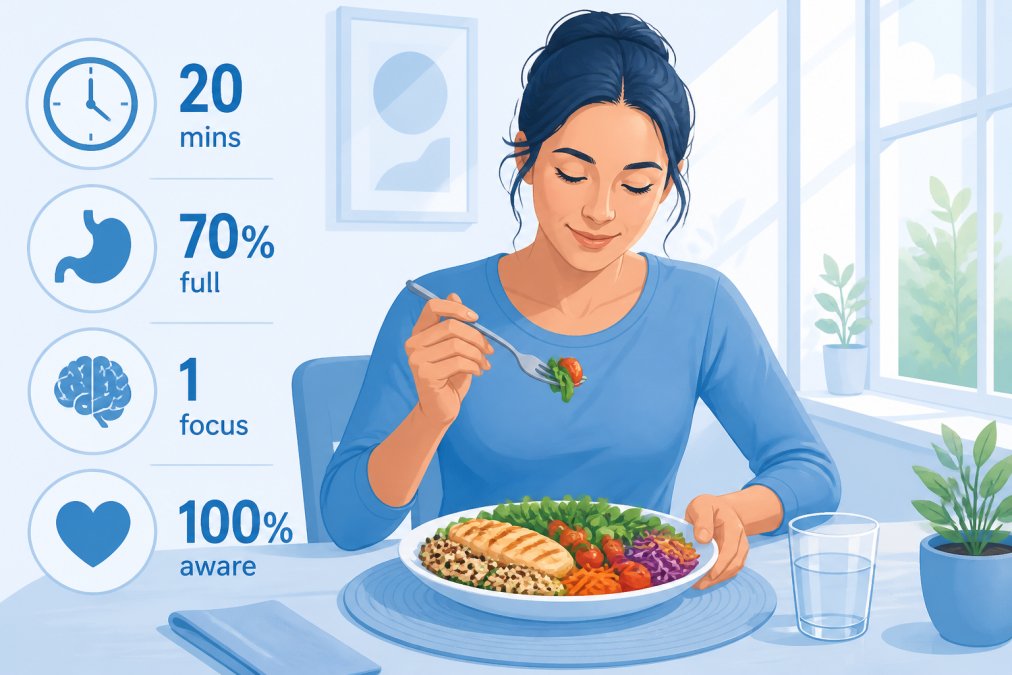
Mindful eating means bringing awareness back to the eating experience. Notice colours, smells, and textures. Chew slowly. Put your fork down between bites. Halfway through your meal, pause and check your hunger level. You’ll enjoy your food more and naturally eat less because you notice when you’re satisfied.
(/weight-loss-consultation/): Building a Healthier Relationship with Food]
Your psychological relationship with food determines whether weight loss sticks. If you see food as the enemy or yourself as lacking willpower, you’re fighting internally. If you see food as neutral and yourself as capable of aligned choices, the experience shifts. You’re making decisions that serve you, not being "good" or "bad."
Many people use food to manage emotions. Stress, boredom, loneliness, or fatigue can trigger eating even when you’re not physically hungry. When you notice emotional eating, pause and ask: am I physically hungry, or seeking comfort? If emotional, find another way to address it, a walk, a phone call, deep breathing. This removes the psychological pressure that drives overeating.
Restrictive eating often backfires into binge eating. If you’ve been severely limiting food, your body and mind eventually rebel. The solution isn’t stricter restriction, it’s giving yourself permission to eat balanced meals and snacks without guilt.
Portion Control Without Counting Calories
Counting calories works for some people, but it’s tedious and unsustainable for most. Visual guides offer a practical alternative.
Visual portion guides and plate methods
The plate method is simplest: fill half your plate with non-starchy vegetables, a quarter with lean protein, and a quarter with whole grains or starchy vegetables. This creates balanced meals without maths. Vegetables fill you up with few calories. Protein keeps you satisfied. The carbohydrate portion is controlled but not eliminated.
Hand-based portions offer another approach: a palm-sized portion of protein, a fist-sized portion of carbohydrates, a thumb-sized portion of fat, and unlimited vegetables. These proportions scale with your body size. After a few weeks, portion sizes become automatic.
Eating pace and satiety signals
Your brain takes about 20 minutes to register fullness. If you eat quickly, you’ll consume significantly more before feeling satisfied. If you eat slowly, you’ll feel satisfied with less.
Put your fork down between bites, chew thoroughly, and eat without distractions. Eat with others when possible, social eating naturally slows you down. Drink water with your meal. These shifts have measurable impact on how much you eat.
Physical Activity and Lifestyle Modification for Weight Management
Weight loss happens primarily through nutrition, but physical activity amplifies results and makes them sustainable. Exercise preserves muscle mass, improves metabolic health, and creates a larger caloric deficit. It also improves mood, sleep, and wellbeing, all supporting long-term adherence.
You don’t need intense exercise. Moderate activity, brisk walking, cycling, swimming, done consistently is more valuable than occasional intense workouts. Aim for at least 150 minutes of moderate activity weekly, or 75 minutes of vigorous activity. Include strength training twice weekly to preserve muscle mass.
Increasing daily movement, taking stairs, walking for errands, standing while working, accumulates significantly. Someone who walks 10,000 steps daily burns substantially more calories than someone who exercises 30 minutes but sits the rest of the day.
Exercise reduces stress, improves mood, and creates a sense of agency. This mindset shift often leads to better food choices and greater adherence.
Sustainable Weight Loss Tips: Sleep, Stress and Long-Term Adherence
Weight loss isn’t just about calories and exercise. Sleep, stress levels, and emotional wellbeing directly influence your weight and ability to maintain it.
Sleep hygiene and hormonal regulation
Poor sleep disrupts hunger and fullness hormones. When sleep-deprived, ghrelin (hunger hormone) increases and leptin (fullness hormone) decreases. You feel hungrier, less satisfied, and crave high-calorie foods more intensely.
Aim for 7-9 hours nightly. Prioritise sleep consistency, going to bed and waking at similar times stabilises your circadian rhythm. Keep your bedroom cool, dark, and quiet. Avoid screens an hour before bed. These are foundational to weight management.
Stress management and emotional eating
Chronic stress elevates cortisol, increasing appetite and promoting fat storage. Stress also triggers emotional eating. Stress management techniques, meditation, deep breathing, exercise, time in nature, creative hobbies, reduce cortisol and improve your ability to make aligned choices.
Perfectionism sabotages long-term success. If you approach weight loss as all-or-nothing, a single slip becomes reason to abandon the effort. A sustainable mindset: progress, not perfection. One meal doesn’t define your trajectory. You’re building a long-term pattern.

People who have tried multiple diets and regained weight benefit most from approaches addressing psychological and emotional aspects of eating, not just nutritional ones. Sustainable weight loss requires changing your relationship with food and your body.
Setting Realistic Goals and Recognising Non-Scale Victories
The scale is useful but not the only measure of progress. Weight fluctuates daily due to water retention, hormones, and digestion. Focusing solely on the scale often leads to discouragement.
Realistic goals are specific and measurable but not extreme. Losing 0.5 to 1 kilogram weekly is sustainable. Set a goal taking 6-12 months to achieve, allowing lifestyle change rather than temporary restriction.
Non-scale victories matter as much as weight loss. Notice improved energy, better sleep, clothes fitting differently, increased strength, improved mood, or better digestion. These changes often precede significant weight loss and indicate positive response.
| Metric | What It Measures | Why It Matters |
|---|---|---|
| Weekly weight | Water retention, fat loss, muscle changes | Useful trend indicator over 4+ weeks |
| Energy levels | Metabolic health, sleep quality | Early indicator of positive change |
| Clothes fit | Fat loss independent of muscle gain | Reflects body composition change |
| Strength gains | Muscle preservation, metabolic health | Indicates exercise effectiveness |
| Sleep quality | Hormonal balance, stress levels | Foundational to sustained progress |
| Mood and motivation | Psychological wellbeing, adherence | Predicts long-term success |
Getting Professional Support for Weight Management
Sustainable weight loss often benefits from professional guidance. A GP can assess your overall health, identify underlying conditions affecting weight, and rule out metabolic issues. A registered dietitian provides personalised nutrition advice. A therapist addresses emotional eating and builds psychological resilience.
MMS Clinic offers a medically supervised weight loss programme. A GMC-registered doctor leads your care, ensuring your weight loss is safe and appropriate for your individual health profile. You receive ongoing support, monitoring, and guidance, not a generic diet plan. Medical supervision means adjustments can be made if needed, and underlying health factors are addressed.
The difference between generic online programmes and medically supervised care is significant. A doctor knows your medical history, medications, and health risks. They can identify whether weight loss will benefit your specific situation and monitor progress to adjust your approach accordingly.
Professional support provides accountability and motivation. Regular appointments create external structure. This combination, personalised medical guidance, ongoing support, and accountability, dramatically increases likelihood of sustained success.
Weight loss without restrictive diets is achievable when you focus on sustainable behavioural change rather than temporary restriction. If you’ve struggled with weight management or tried multiple diets without lasting results, a medically supervised programme can provide personalised guidance and ongoing support. MMS Clinic offers doctor-led weight loss programmes with proper medical monitoring, ensuring your approach is safe and tailored to your individual health profile. Book a free discovery call to discuss how sustainable weight loss can work for you.
Frequently Asked Questions
How can I lose weight without feeling deprived on a diet?
Weight loss without restrictive diets focuses on sustainable lifestyle changes rather than elimination. Include foods you enjoy in smaller portions, choose nutrient-dense options that keep you fuller longer, and practise mindful eating to recognise true hunger signals. The key is creating a modest caloric deficit through balanced nutrition and physical activity, not deprivation. Most people find this approach easier to maintain long-term because it doesn't require giving up entire food groups or following rigid meal plans.
What is the best portion control method that doesn't involve counting calories?
Visual portion guides work well without calorie tracking. Use your hand as a reference: a palm-sized portion of protein, a fist-sized portion of carbohydrates, and a thumb-sized portion of fats per meal. Fill half your plate with vegetables, a quarter with protein, and a quarter with whole grains or starchy vegetables. Eating slowly, using smaller plates, and pausing mid-meal to check your fullness also help manage portions naturally without mental maths.
Why do restrictive diets often fail for sustainable weight loss?
Restrictive diets create unsustainable patterns because they rely on willpower and deprivation, which are difficult to maintain long-term. When food is completely off-limits, cravings intensify, leading to cycles of restriction and overeating. Additionally, these diets often ignore the psychological relationship with food and don't address underlying habits or emotional eating triggers. Sustainable weight loss requires behavioural change and a flexible approach that fits into your life permanently, not a temporary phase of strict rules.
How does sleep and stress management affect weight loss without dieting?
Sleep and stress directly influence hormones that regulate hunger and metabolism. Poor sleep increases cortisol and ghrelin (hunger hormone), making you crave high-calorie foods and eat more. Chronic stress triggers emotional eating and disrupts metabolic health. Prioritising 7-9 hours of quality sleep and managing stress through exercise, meditation or other relaxation techniques supports weight management naturally. These lifestyle modifications work alongside balanced nutrition and physical activity to create sustainable weight loss without the need for restrictive eating patterns.
This article was written using GrandRanker