
Table of Contents
- What Is a Private Joint Injection Clinic in Coventry?
- Types of Joint Injections Available in Coventry
- Why Ultrasound-Guided Injections in Coventry Deliver Better Results
- Step-by-Step: What to Expect at Your Private Joint Injection Clinic Appointment in Coventry
- Joint Pain Treatment in Coventry: NHS Wait vs. Private Pathway
- Steroid Injection Pricing in Coventry: What Affects the Cost?
- Common Mistakes to Avoid When Choosing a Joint Injection Clinic
- Conclusion: Take the First Step Towards Pain-Free Movement
Last Updated: July 31, 2026
Choosing a private joint injection clinic Coventry patients can trust is not a trivial decision, particularly when chronic pain is affecting your ability to work, sleep, or move freely. At MMS Clinic, we see patients weekly who have been managing joint pain for months, sometimes years, before seeking private treatment. The gap between when pain begins and when it gets properly addressed is the real problem this guide tackles. Below, we cover every stage of the process: what to expect, which injection type suits which condition, how private and NHS pathways compare, and what questions to ask before booking.
What Is a Private Joint Injection Clinic in Coventry?
A private joint injection clinic is a medical facility where GMC-registered doctors administer therapeutic injections directly into or around a painful joint, without an NHS referral or waiting list. The aim is targeted pain management: delivering medication precisely where it is needed to reduce joint inflammation, restore mobility, and improve quality of life.
The conditions treated span the full musculoskeletal spectrum. Patients presenting at a joint injection clinic in Coventry typically arrive with pain that has not responded well to physiotherapy alone, or they are waiting for orthopaedic assessment and need relief in the meantime.
Conditions Commonly Treated with Therapeutic Injections
The most frequently treated conditions include:
- Knee osteoarthritis and arthritic pain in weight-bearing joints
- Frozen shoulder and rotator cuff tendonitis
- Tennis elbow and golfer’s elbow
- Trigger finger
- Hip bursitis and trochanteric pain syndrome
- Plantar fasciitis
- Sacroiliac joint dysfunction
- Carpal tunnel and wrist pain
According to Versus Arthritis UK musculoskeletal statistics, musculoskeletal conditions affect roughly 20 million people in the UK, making them one of the leading causes of disability and long-term pain. Many of these patients are suitable candidates for therapeutic injection before surgery becomes necessary.
Who Is a Good Candidate, and Who Should Avoid Injections?
Most adults with localised joint pain, confirmed by clinical assessment, are suitable candidates. A good candidate has a specific, identifiable source of pain, has tried conservative management such as physiotherapy or anti-inflammatory medication, and is not currently pregnant or on anticoagulant therapy that cannot be temporarily paused.
Injections are not appropriate for everyone. Contraindications include active joint infection, uncontrolled diabetes, allergy to the injection components, and certain skin conditions at the injection site. A thorough clinical assessment before any procedure is non-negotiable. Any reputable private joint injection clinic in Coventry will screen for these factors before proceeding.
Never book a joint injection without a prior clinical assessment. Administering a corticosteroid into an infected joint can cause serious harm. A proper consultation is not a formality, it is a safety step.
Types of Joint Injections Available in Coventry
There are three main injection types offered at a private joint injection clinic in Coventry. Understanding the differences helps you have a more informed conversation with your doctor.
| Injection Type | Primary Use | Typical Onset | Best For |
|---|---|---|---|
| Corticosteroid | Reduce inflammation | 2-7 days | Acute flare-ups, bursitis, tendonitis |
| Hyaluronic Acid | Restore synovial fluid | 2-4 weeks | Knee osteoarthritis, chronic stiffness |
| Joint Aspiration | Drain excess fluid | Immediate | Swollen joints, effusion relief |
Corticosteroid Injections: Fast-Acting Anti-Inflammatory Relief
Corticosteroid injections are the most commonly administered therapeutic injection in musculoskeletal practice. A corticosteroid is a synthetic version of cortisol, a hormone the body naturally produces to regulate inflammation. Injected directly into the affected joint or soft tissue, it suppresses the local inflammatory response rapidly.
Most patients notice meaningful improvement within two to seven days. The effect can last anywhere from a few weeks to several months, depending on the severity of the underlying condition and the joint involved. Corticosteroid injections are particularly effective for frozen shoulder, tennis elbow, plantar fasciitis, and bursitis.
Clinicians generally recommend limiting corticosteroid injections to a small number per year per joint, as repeated high-dose injections can affect cartilage integrity over time. Your doctor will factor this into your treatment plan.
Hyaluronic Acid Injections: Restoring Synovial Fluid
Hyaluronic acid is a substance naturally found in synovial fluid, the lubricating liquid that cushions joints. In osteoarthritic joints, synovial fluid degrades in both quality and quantity, increasing friction and pain. Hyaluronic acid injections, sometimes called viscosupplementation, replenish this fluid.
The onset is slower than corticosteroid, typically two to four weeks, but the duration of relief can be longer. These injections are most commonly used in knee osteoarthritis and are a well-evidenced option for patients who are not yet at the surgical threshold but are struggling with daily function.
As documented in NICE guidance on osteoarthritis management, viscosupplementation is an established treatment pathway for knee osteoarthritis when other conservative measures have been insufficient.
Joint Aspiration: Draining Excess Fluid
Joint aspiration involves removing excess fluid from a swollen joint using a needle and syringe. It is both diagnostic and therapeutic: the drained fluid can be analysed for infection or crystals, and the removal of fluid provides immediate pressure relief.
Aspiration is often combined with a corticosteroid injection in the same appointment, a common approach for acutely swollen knees. The procedure is minimally invasive, typically completed within minutes, and patients usually notice immediate reduction in swelling.
Why Ultrasound-Guided Injections in Coventry Deliver Better Results
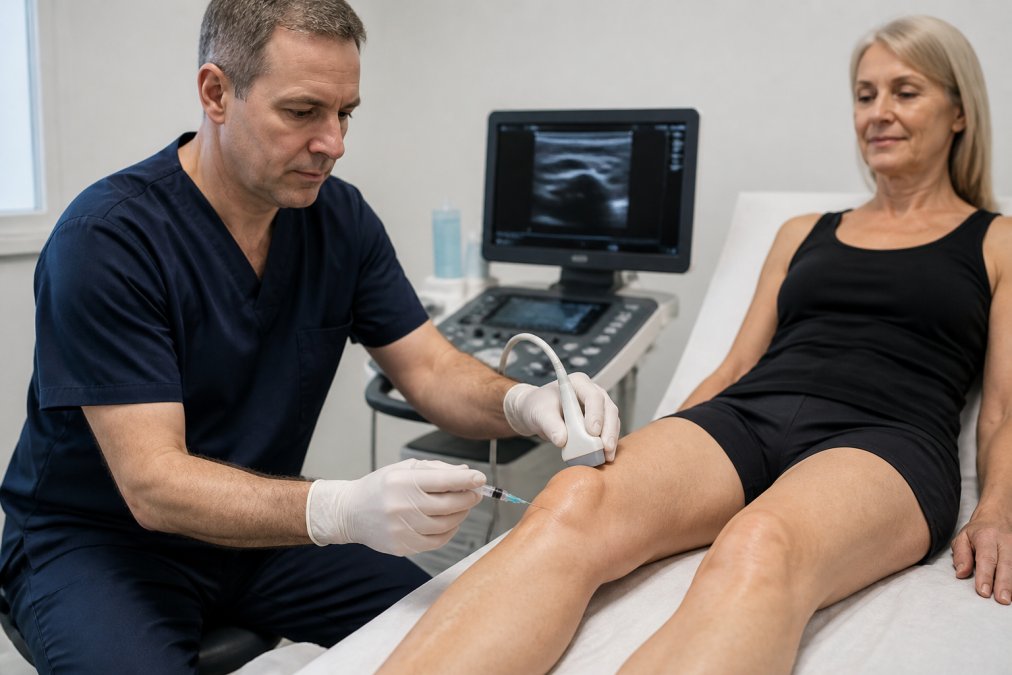
The real difference between a precise injection and a missed one is visibility. Ultrasound-guided injections use real-time musculoskeletal ultrasound imaging to direct the needle to exactly the right anatomical location, confirming placement before the medication is released.
This matters more than many patients realise. Landmark-guided injections, where the clinician relies on anatomical feel alone, carry a meaningful risk of suboptimal needle placement, particularly in deeper joints such as the hip, or in patients with higher body mass. Ultrasound guidance reduces this risk substantially.
The benefits of ultrasound-guided procedure include:
- Confirmation of needle position before injection
- Reduced risk of inadvertent injection into blood vessels or nerves
- Ability to visualise soft tissue pathology during the same-day procedure
- Higher clinical efficacy, particularly for small or deep joints
- A diagnostic scan and treatment combined in one appointment
Ask specifically whether your clinic uses ultrasound guidance as standard. Some clinics reserve it only for complex cases. At a properly equipped private joint injection clinic in Coventry, ultrasound guidance should be the default, not the exception.
Step-by-Step: What to Expect at Your Private Joint Injection Clinic Appointment in Coventry
The patient journey at a private joint injection clinic in Coventry follows a clear, predictable structure. There are no surprises if you know what each stage involves.
Step 1, Book a Free Discovery Call or Consultation
At MMS Clinic, patients can book a free discovery call to describe their symptoms and confirm they are suitable candidates before paying for anything.
Step 2, Clinical Assessment and Treatment Plan
The consultation involves a structured clinical assessment: a review of your medical history, current medications, previous treatments, and a physical examination of the affected joint. The doctor will determine which injection type is appropriate, whether ultrasound guidance is indicated, and how many injections are likely needed.
A written treatment plan is produced before any procedure takes place. This is the standard you should expect at any reputable joint injection clinic.
Step 3, The Injection Procedure Itself
The injection is administered under local anaesthetic to minimise discomfort. The skin is cleaned, the ultrasound probe is positioned, and the needle is guided to the target location under live imaging. The procedure itself typically takes ten to fifteen minutes.
Patients are monitored briefly afterwards before being discharged. Most people drive themselves home, though some prefer to bring someone with them, particularly for their first injection.
Step 4, Post-Injection Care and Recovery
Recovery time is short. Most patients return to light activity the same day and resume normal routines within 24 to 48 hours. There are standard post-injection care guidelines to follow:
- Avoid strenuous exercise or heavy lifting for 48 hours
- Apply ice to the injection site if there is localised soreness
- Expect a temporary increase in pain for 24 to 48 hours as the local anaesthetic wears off
- Contact the clinic if you experience fever, significant swelling, or worsening pain after 72 hours
The improvement from a corticosteroid injection often builds over five to seven days. Hyaluronic acid injections take longer, and patients are typically reviewed at four weeks.
Post-injection soreness in the first 24-48 hours is normal and does not mean the injection has failed. The therapeutic effect of a corticosteroid builds over several days as the anti-inflammatory action takes hold.
Joint Pain Treatment in Coventry: NHS Wait vs. Private Pathway
The NHS provides excellent musculoskeletal care, but demand consistently outpaces capacity. Waiting times for a first orthopaedic outpatient appointment vary by trust and condition, but many patients in the West Midlands wait several months before being seen, and further time passes before any procedure is carried out.
For someone with acute shoulder pain, a frozen joint, or an arthritic knee that is limiting daily function, that wait is not clinically neutral. Pain that goes untreated leads to compensatory movement patterns, muscle weakness, and reduced range of motion that compound the original problem.
Private treatment at a joint injection clinic in Coventry offers an alternative: appointments typically available within days, not months, a single point of contact rather than a referral chain, and a treatment plan that begins at the consultation rather than months later.
Insurance vs. Self-Pay: Understanding Your Options
Two main payment pathways exist for private joint injections in the UK.
Private health insurance: Many UK health insurance policies, including those offered by Bupa, AXA Health, and Aviva, cover musculoskeletal consultations and therapeutic injections. You will typically need a GP referral letter and a pre-authorisation number from your insurer before the appointment. Check your policy for any excess, annual limits, or exclusions for pre-existing conditions.
Self-pay: Patients without insurance, or those whose policy does not cover the specific treatment, pay directly. Self-pay is straightforward: no referral required, no insurer to pre-authorise, and no policy exclusions to navigate. You book, attend, and pay for the treatment you need.
For pricing information specific to MMS Clinic’s joint injection services, visit the MMS Clinic pricing page directly. Prices vary depending on the injection type, joint treated, and whether ultrasound guidance is used.
Steroid Injection Pricing in Coventry: What Affects the Cost?
Steroid injection Coventry pricing is not a single fixed number. Several factors influence what you will pay at any private joint injection clinic in Coventry:
- Joint complexity: Hip and sacroiliac joint injections require more technical skill and time than a straightforward knee or elbow injection.
- Ultrasound guidance: Clinics that use musculoskeletal ultrasound as standard may price this into the procedure cost. It is worth paying for; the clinical efficacy difference is real.
- Consultation vs. procedure fees: Some clinics charge separately for the initial clinical assessment and the injection itself. Others bundle them. Clarify this before booking.
- Number of injections: A bilateral knee injection or a course of hyaluronic acid injections will cost more than a single corticosteroid injection.
The Care Quality Commission guidance on private healthcare pricing transparency sets expectations for how private providers should communicate costs to patients. A reputable clinic will give you a clear, written breakdown before any treatment begins.
Common Mistakes to Avoid When Choosing a Joint Injection Clinic
Most people get this wrong in one of three ways.
Choosing on price alone. The cheapest injection is not the best injection. If a clinic does not use ultrasound guidance as standard, does not carry out a clinical assessment beforehand, or cannot tell you the qualifications of the administering clinician, the lower price reflects lower standards.
Skipping the consultation. Some clinics offer walk-in injections with minimal assessment. This is a red flag. A proper clinical assessment determines whether the injection is appropriate, safe, and likely to be effective. Injecting into the wrong structure, or injecting when there is an underlying infection, can cause serious harm.
Not asking about follow-up. A single injection is rarely the end of the conversation. Ask what the follow-up pathway looks like, what happens if the injection does not provide adequate relief, and whether the clinic offers a treatment plan rather than a one-off procedure.
Assuming all injections are the same. The distinction between corticosteroid and hyaluronic acid injections matters clinically. A clinic that offers only one type without explaining the rationale is not providing patient-centred care.
What most guides miss is that continuity of care matters as much as the injection itself. Seeing the same GMC-registered doctor who conducted your assessment is not a luxury; it is how good clinical outcomes are achieved.
Frequently Asked Questions
What types of joint injections are available at a private clinic in Coventry?
Private joint injection clinics in Coventry typically offer corticosteroid injections for rapid relief of joint inflammation, hyaluronic acid injections to supplement synovial fluid in arthritic joints, and joint aspiration to drain excess fluid. The most appropriate type depends on your diagnosis, the joint affected, and your clinical history. A GMC-registered doctor will carry out a full assessment before recommending a treatment plan tailored to your musculoskeletal condition.
How much does a private steroid injection cost in Coventry?
Steroid injection pricing at a private joint injection clinic in Coventry varies depending on the joint being treated, whether ultrasound guidance is used, and the specific clinic. Rather than quoting figures that may not apply to your situation, it is best to check the MMS Clinic pricing page directly or book a free discovery call for a personalised quote. Pricing is transparent and available before you commit to any treatment.
Do I need a GP referral to attend a private joint injection clinic in Coventry?
No referral is required to access a private joint injection clinic in Coventry. You can self-refer directly and book a consultation with a GMC-registered doctor who will carry out a clinical assessment, review your medical history, and advise on the most appropriate injection type. This removes the NHS referral pathway entirely, meaning you can often be seen and treated within days rather than waiting months for an orthopaedic appointment.
Are private joint injections covered by health insurance in the UK?
Many UK private health insurance policies, including those from providers such as Bupa, AXA Health, and Vitality, do cover therapeutic joint injections, particularly when there is a documented musculoskeletal diagnosis. However, coverage depends on your individual policy, any exclusions for pre-existing conditions, and whether the insurer requires a GP or specialist referral first. Always confirm with your insurer before booking. Self-pay is also straightforward and often quicker, with no pre-authorisation delays.
What are the potential side effects of joint injections?
Joint injections are minimally invasive but carry some risks. Common side effects include temporary soreness or swelling at the injection site, a short-term flare of pain in the first 24-48 hours, and skin discolouration around the injection point. Repeated corticosteroid injections may affect surrounding soft tissue over time. Infection is rare but possible. A qualified clinician will discuss all contraindications and risks with you during your clinical assessment before proceeding with any therapeutic injection.
Which joints can be treated with ultrasound-guided injections in Coventry?
Ultrasound-guided injections can be used across most weight-bearing and non-weight-bearing joints, including the knee, hip, shoulder, elbow, wrist, and hand. They are also used for soft tissue conditions such as tendonitis, bursitis, plantar fasciitis, and sacroiliac joint pain. Musculoskeletal ultrasound allows the clinician to visualise the target area in real time, improving accuracy and reducing the risk of complications compared with landmark-guided techniques.
Joint pain left unmanaged tends to worsen, not resolve on its own. If you are waiting months for an NHS orthopaedic appointment while your mobility deteriorates, private treatment is a practical and often faster route to relief. MMS Clinic offers GMC-registered doctor-led consultations, ultrasound-guided joint injections, and face-to-face appointments in Coventry, typically available within days. Book a free discovery call with MMS Clinic and take the first step towards pain-free movement.
This article was written using GrandRanker