
Table of Contents
- What Are Skin Tags and Why They Appear on the Neck
- When to See a GP About Skin Tags
- Professional Removal Methods for Neck Skin Tags
- Home Remedies: Safety and Effectiveness
- NHS Skin Tag Removal Criteria and Private Options
- Private Skin Tag Removal Cost and What to Expect
- Aftercare and Preventing Scarring After Removal
- Conclusion
Last Updated: August 16, 2026
What Are Skin Tags and Why They Appear on the Neck
Skin tags are small, benign growths of skin that hang from the body on a thin stalk, medically known as fibroepithelial polyps. They’re harmless but can become irritating, especially when they rub against clothing or jewellery. The neck is one of the most common sites because the skin there is thinner, more sensitive, and experiences constant friction from collars, necklaces, and skin-to-skin rubbing.
Skin tags develop when excess skin cells cluster together. They’re not contagious, won’t turn into cancer, and don’t spread. However, they can bleed if caught or irritated, and their appearance bothers many people enough to seek removal.
Several factors increase your risk of developing neck skin tags: friction from repeated rubbing, hormonal changes during pregnancy, obesity and insulin resistance, diabetes, age, and genetics. The neck is particularly vulnerable because it’s a high-friction zone. Every head turn, collar adjustment, or tight necklace creates ideal conditions for skin tag formation. Unlike skin tags elsewhere, neck tags are highly visible and can catch on jewellery or become irritated by shaving.
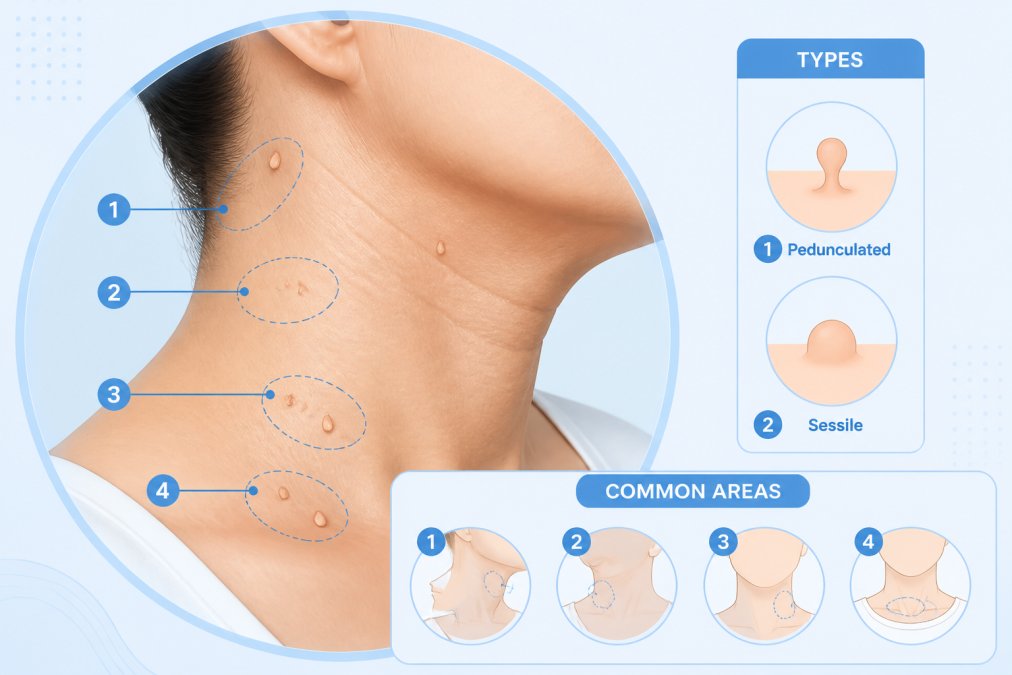
At MMS Clinic, we regularly assess patients seeking removal of neck skin tags. The neck’s anatomy makes removal slightly more complex than other areas: the skin is thinner, blood vessels are closer to the surface, and scarring can be more noticeable. This is why professional removal is often the safest choice for neck skin tags specifically.
When to See a GP About Skin Tags
You should see a GP about skin tags when they’re causing physical discomfort, bleeding frequently, or when you’re concerned about their appearance. If a skin tag is catching on jewellery or clothing constantly, or if it’s become inflamed or infected, a medical assessment is warranted.
More importantly, if you’re unsure whether a growth is actually a skin tag, see your GP. While skin tags are benign, other skin growths can look similar but require different treatment. A GP can confirm the diagnosis and rule out anything more serious.
The NHS will typically assess skin tags but won’t usually remove them unless they’re causing medical problems like bleeding, infection, or obstruction. Cosmetic removal isn’t usually available through the NHS. Many people find that waiting months for an NHS appointment, only to be told removal isn’t covered, is frustrating. A private clinic can assess and treat within days rather than months.
Professional Removal Methods for Neck Skin Tags
Professional removal is the gold standard for neck skin tags because it’s safe, effective, and minimises scarring risk. A qualified healthcare provider can remove skin tags quickly under local anaesthetic, meaning you’ll be awake but the area will be numb. The procedure typically takes 10-15 minutes.
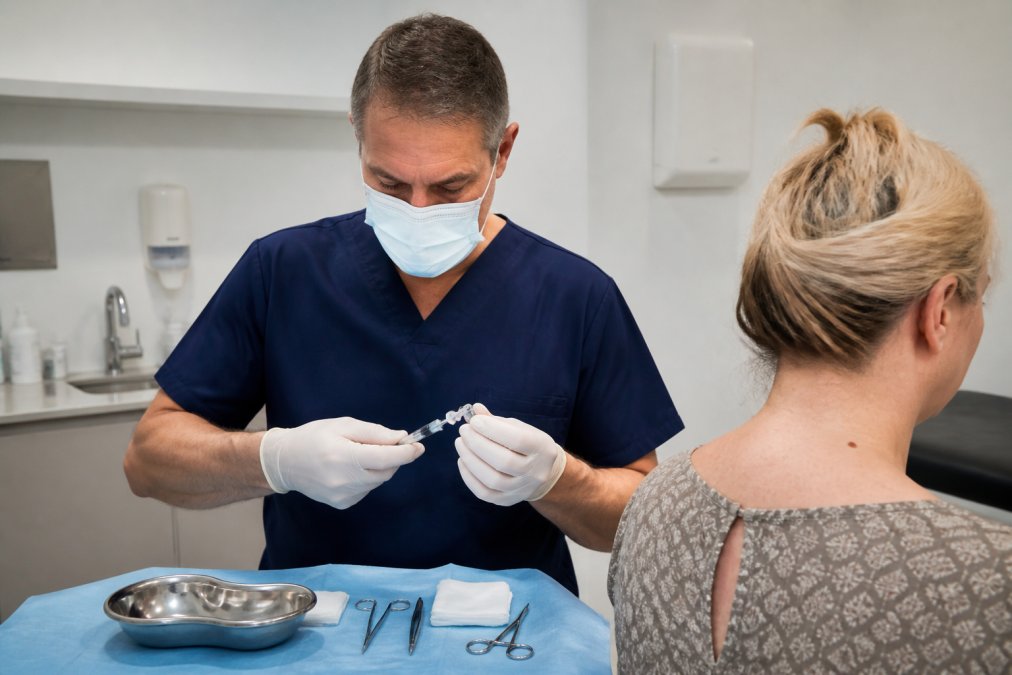
Three main professional methods exist: cryotherapy, surgical excision, and cauterization.
Cryotherapy (Freezing)
Cryotherapy uses liquid nitrogen to freeze the skin tag, causing it to die and fall off naturally. The procedure is quick, usually just a few seconds of freezing per tag. You’ll feel a brief cold sensation and possibly slight stinging, but it’s generally painless.
The advantage is that it’s non-invasive and leaves minimal scarring. The skin tag typically falls off within 1-2 weeks. However, cryotherapy works best on smaller skin tags and may require repeat treatments for larger ones. There’s a small risk of temporary hyperpigmentation or hypopigmentation, though this usually resolves. For neck skin tags specifically, cryotherapy is often ideal because it avoids cutting and stitching, reducing scarring on this visible area. The procedure requires no downtime.
Surgical Excision
Surgical excision involves using a scalpel or surgical scissors to cut away the skin tag at its base. The wound is then closed with stitches, which are removed after 7-10 days. This method is most effective for larger skin tags or those with a thick stalk.
The advantage is that it’s definitive, the tag is completely removed in one procedure. However, surgical excision does leave a small scar, though a skilled practitioner can minimise this. For the neck, where scarring is more visible, technique matters significantly. The procedure requires local anaesthetic and takes 15-20 minutes. You’ll need to keep the wound clean and dry during healing.
Cauterization and Electrodessication
Cauterization uses heat to burn away the skin tag, either with a heated instrument or electrical current. The procedure is quick and leaves a small burn mark that heals into a scab, which falls off within 1-2 weeks.
Cauterization is effective for small to medium skin tags and reduces bleeding risk. However, there’s a higher risk of scarring compared to cryotherapy, and the healing process can be uncomfortable. For neck skin tags, cauterization is less commonly recommended than cryotherapy or excision because of the scarring risk on visible skin.
Home Remedies: Safety and Effectiveness
Many people search for home remedies before considering professional removal. Some options exist, but safety varies significantly, particularly for neck skin tags.
Apple Cider Vinegar and Over-the-Counter Options
Apple cider vinegar is a popular home remedy. People typically soak a cotton ball in apple cider vinegar, tape it to the skin tag, and leave it for several hours daily. Some report the tag falling off within 2-4 weeks, though results are inconsistent.
Over-the-counter products marketed for skin tag removal often contain similar acidic ingredients. However, home remedies work slowly, if at all, and are unpredictable. More importantly, they carry risks. Apple cider vinegar can irritate surrounding healthy skin, causing redness, burning, or dermatitis. On the neck, where skin is delicate, this irritation can be particularly uncomfortable.
Why You Should Avoid Cutting or Tying Off Skin Tags
A dangerous myth persists that you can safely cut off skin tags yourself or tie them off with thread to stop blood flow. Do not do this.
Cutting a skin tag yourself risks serious bleeding. Skin tags have blood vessels running through them, and cutting without proper technique can hit a vessel, causing bleeding that’s difficult to stop. On the neck, near major blood vessels, this risk is higher. You could also introduce infection into an open wound.
Tying off a skin tag with thread is equally problematic. While the theory is that cutting off blood supply will cause the tag to fall off, the reality is messier. The string can slip, the tag can bleed, and infection can develop. The neck is particularly high-risk for self-removal attempts because any infection or bleeding complication is more serious. Neck infections can spread quickly and involve deeper structures.
Professional removal exists for good reason. A trained practitioner has sterile instruments, local anaesthetic, proper lighting, and the knowledge to handle complications. The cost of professional removal is far less than the cost of treating an infection or dealing with poor scarring from a botched DIY attempt.
NHS Skin Tag Removal Criteria and Private Options
The NHS will assess skin tags and confirm they’re benign, but removal criteria are strict. The NHS considers skin tag removal cosmetic unless the tag is causing medical problems: recurrent bleeding, infection, obstruction, or significant functional impairment.
In practice, this means if your neck skin tag is simply annoying or unsightly, the NHS won’t remove it. If it’s bleeding from being caught on jewellery, that might qualify as medical necessity, but waiting times can be months.
This is where private clinics offer a real advantage. Private practitioners can remove skin tags based on your preference, not just medical necessity. You can have the procedure done within days, not months, and have choice in the removal method.
MMS Clinic specialises in minor surgery procedures including skin tag removal. As a doctor-led private clinic, we assess each patient individually and determine the best removal method for their specific situation. For neck skin tags, we consider the cosmetic outcome carefully because we know scarring on the neck is more noticeable. We offer cryotherapy, surgical excision, and other methods depending on the tag’s size and your preferences.
Private Skin Tag Removal Cost and What to Expect
Private skin tag removal costs vary depending on the method used, the number of tags, and the clinic. For specific pricing information, visit the MMS Clinic website or contact the clinic directly for a quote.
What you can expect from a private skin tag removal appointment is thorough assessment, discussion of your options, and a procedure performed by a qualified practitioner. Most appointments take 30-45 minutes from arrival to discharge. You’ll have local anaesthetic applied, so the procedure itself is painless. Depending on the method, you’ll either have stitches to be removed later, or you’ll have a small wound that heals naturally.
Recovery is quick. You can return to work the same day. You’ll be given aftercare instructions to follow at home. Most people experience minimal discomfort after the anaesthetic wears off.
Aftercare and Preventing Scarring After Removal
How you care for the wound after removal significantly impacts scarring. The first week is critical.
Keep the wound clean and dry. Wash gently with soap and water, then pat dry. Don’t soak the area, avoid baths, swimming, and prolonged water exposure. If stitches were used, keep the area clean until they’re removed. Don’t pick at the wound or pull on stitches.
Avoid friction. This is particularly important for neck skin tag removal because the neck moves constantly. Wear loose clothing that doesn’t rub the wound. If you normally wear a tight collar or necklace, skip it for 2-3 weeks.
Sun exposure can darken scars. Use sunscreen (SPF 30+) on the wound for at least 3 months after removal. Some practitioners recommend silicone gel or scar-reducing creams after the wound has fully closed. Start using them only after the wound is completely healed, typically 2-3 weeks post-removal.
Avoid smoking. Smoking impairs wound healing and increases infection risk. Watch for signs of infection: increasing redness, warmth, swelling, pus, or fever. If these develop, contact your healthcare provider.
Scarring on the neck is a legitimate concern because it’s visible. With proper technique and aftercare, most scars fade significantly within 3-6 months. If you’re concerned about scarring after professional removal, discuss this with your practitioner beforehand. MMS Clinic uses techniques specifically designed to reduce visible scarring, particularly on areas like the neck where cosmetic outcome matters.
Skin tags on the neck are common, benign, and entirely treatable. The choice between home remedies and professional removal depends on your timeline, budget, and comfort level with risk. Home remedies are slow and unpredictable. Professional removal is safe, effective, and quick. For neck skin tags specifically, where scarring visibility is a concern, professional removal under local anaesthetic offers the best balance of safety and cosmetic outcome. MMS Clinic provides doctor-led assessment and removal procedures, with appointments available within days rather than months, and the continuity of care that ensures your concerns about scarring and cosmetic result are properly addressed.
Frequently Asked Questions
Is it safe to remove skin tags on the neck at home?
Removing skin tags on your neck at home carries significant risks. The neck contains important blood vessels and nerves, and attempting to cut, tie off, or burn a skin tag yourself can cause bleeding, infection, or permanent scarring. Over-the-counter remedies like apple cider vinegar work slowly and unpredictably. Professional removal under local anaesthetic is safer and more effective, especially for neck skin tags where precision matters.
How much does private skin tag removal cost?
Private skin tag removal pricing depends on the number of tags, their size, and the removal method chosen. Pricing varies between clinics and procedures. For current pricing information and a personalised quote, visit the MMS Clinic pricing page or book a free discovery call to discuss your specific needs with a GMC-registered GP.
When should I see a GP about skin tags on my neck?
See a GP if a skin tag is growing rapidly, bleeding frequently, or causing discomfort from friction. You should also seek professional advice if you're unsure whether a growth is actually a skin tag or something else requiring investigation. If you want removal for cosmetic reasons or the tag is bothersome, a GP can advise on options and refer you to appropriate treatment. The NHS typically only removes skin tags if they're causing medical problems; cosmetic removal is usually available privately.
What's the difference between cryotherapy and surgical excision for skin tag removal?
Cryotherapy uses liquid nitrogen to freeze the skin tag, which then falls off over 1-2 weeks. It's quick and minimally invasive but may require multiple treatments. Surgical excision involves cutting the tag away under local anaesthetic, providing immediate removal and allowing tissue to be sent for pathology testing if needed. Excision leaves a small wound that heals within 7-10 days. Your GP can recommend the best method based on the tag's size, location, and your preferences.
This article was written using GrandRanker