
Table of Contents
- What Is a Sebaceous Cyst?
- Sebaceous Cyst Removal: The Surgical Procedure
- Sebaceous Cyst Removal Recovery Time and Aftercare
- Signs of an Infected Sebaceous Cyst and When to Seek Care
Last Updated: August 22, 2026
What Is a Sebaceous Cyst?
A “sebaceous cyst” is a common term used for what are more accurately called epidermoid or pilar cysts. These are benign, slow-growing lumps beneath the skin containing keratin, a protein found in the outer layer of skin and hair. Despite the name, these cysts are generally not formed from sebaceous gland secretions. Epidermoid cysts can develop when cells from the surface layer of the skin become trapped deeper in the skin, sometimes following inflammation, irritation or injury. They are surrounded by a cyst wall or lining and contain keratin. Pilar cysts arise from cells associated with hair follicles and are particularly common on the scalp. These cysts are usually benign and are not generally a cause for concern. However, any unexplained or unusual lump should be assessed to confirm the diagnosis. Very rarely, a malignant tumour can arise within or be mistaken for an epidermoid cyst.
Most people discover cysts by accident, a small, firm bump under the skin that doesn’t hurt unless pressed. They can occur almost anywhere on the skin, but are commonly found on the face, neck, chest, upper back and scalp. Small cysts that are not causing symptoms can often be safely left alone. Removal may be considered if a cyst is painful, repeatedly inflamed or infected, interferes with everyday activities, or is cosmetically bothersome. Because other skin and soft-tissue lumps can look similar, an unexplained lump should be assessed by an appropriately qualified clinician before removal.
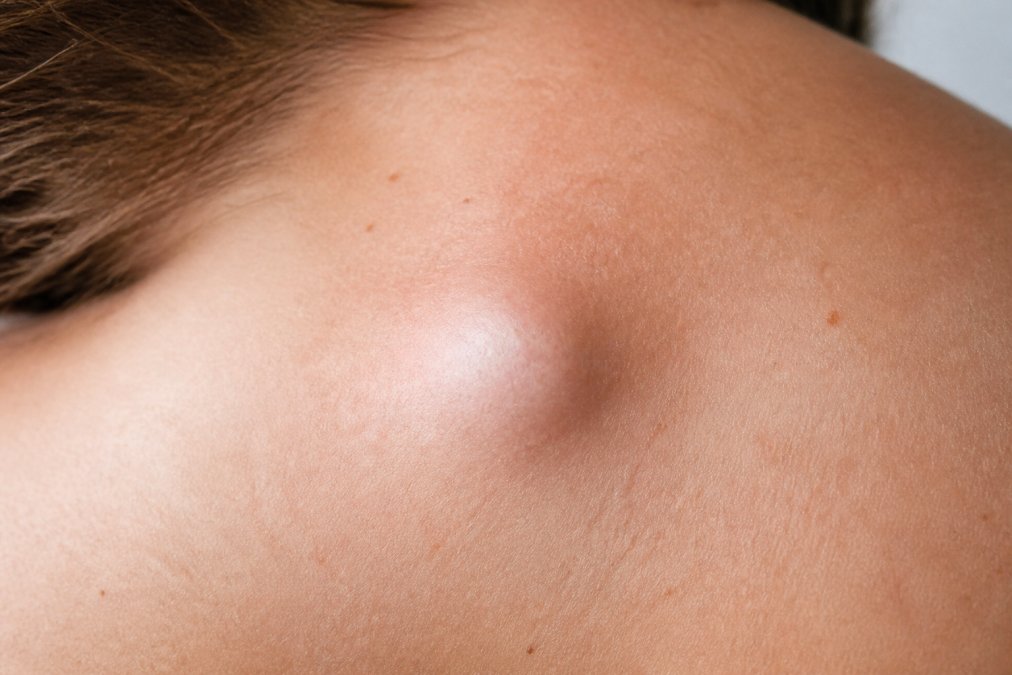
Close-up of a typical epidermoid (“sebaceous”) cyst beneath the skin with clear definition and well-lit for educational purposes
Sebaceous Cyst Removal: The Surgical Procedure
Complete surgical excision is the most definitive treatment when removal of an epidermoid or pilar cyst is appropriate. The aim is to remove the cyst wall or lining and its contents as completely as possible, as leaving cyst lining behind increases the risk of recurrence.
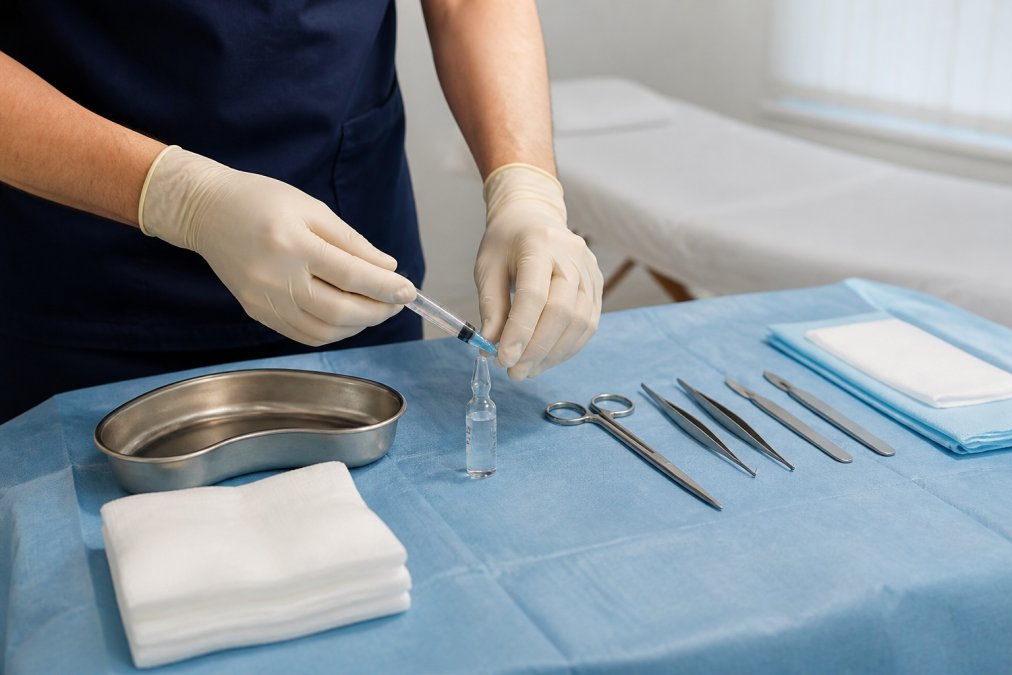
Cyst removal is usually performed under local anaesthetic. The anaesthetic is injected around the cyst to numb the treatment area. You may feel a brief sting or discomfort when the anaesthetic is injected, but once the area is fully numb, you should not normally feel sharp pain during the procedure. You may instead feel pressure, pulling or movement as the cyst is removed.
Your doctor makes an incision planned according to the cyst’s size, location and the surgical technique being used, with the aim of removing the cyst safely while minimising unnecessary scarring. The clinician carefully separates and removes the cyst and its lining, aiming to preserve the capsule where possible. Previously ruptured or inflamed cysts can be more difficult to remove completely. If cyst lining remains, the cyst can recur. Complete removal of the lining reduces this risk, although recurrence can still occur.
The wound may be closed with dissolvable or removable sutures, depending on the location, wound and clinician’s preference. A straightforward cyst removal may take around 30 minutes, although larger, deeper, recurrent or difficult-to-access cysts can take longer.
Following the procedure, you will normally remain at the clinic for a short period while your clinician checks that you are well and provides your aftercare instructions. You can then leave the clinic and continue with light daily activities as advised. Your clinician will advise you when you can return to normal activities. Many people can resume daily activities relatively quickly, but strenuous exercise, heavy lifting and activities that put pressure or tension on the wound may need to be avoided for a period of time, depending on the location and extent of the procedure.
At MMS Clinic, the procedure is personally performed by Dr Ayaz Tokhi, an experienced GMC-registered GP with a special interest in minor skin surgery. The procedure is carried out using appropriate infection-control and aseptic techniques, with sterile and/or single-use instruments as appropriate to the procedure. You will be provided with aftercare instructions specific to your procedure before leaving the clinic.
Sebaceous Cyst Removal Recovery Time and Aftercare
Recovery from sebaceous cyst removal is straightforward for most people. The wound heals within 1-2 weeks, though complete healing of deeper tissue layers continues for 4-6 weeks (peer-reviewed research). Keep the wound clean and dry for the first 48 hours. After that, gentle washing with soap and water is fine. Your doctor will provide specific instructions on when to change dressings and how to care for sutures.
Scarring depends on cyst size, location, your skin type, and how well you follow aftercare instructions. Smaller cysts on areas with good blood supply tend to heal with minimal scarring. Larger cysts may leave a more noticeable scar, though it usually fades significantly over 6-12 months.
Most people return to normal activities within 3-5 days. Strenuous exercise and heavy lifting should be avoided for 1-2 weeks to reduce infection risk.
Signs of an Infected Sebaceous Cyst and When to Seek Care
An infected sebaceous cyst develops when bacteria enter the cyst through rupture or puncture. Signs of infection include increasing redness, warmth to the touch, pus or foul-smelling discharge, swelling that worsens after 48 hours, and intensifying pain.
If you notice these symptoms, seek medical attention promptly. An infected cyst may require drainage and antibiotics rather than standard excision. Even before removal, some sebaceous cysts become infected spontaneously, this is one valid reason to have a cyst removed, as it’s likely to happen again. Post-operative infection is rare when proper sterile technique is used and aftercare instructions are followed, but contact your doctor immediately if you develop fever, rapidly spreading redness, or significant swelling after your procedure.
A sebaceous cyst that ruptures on its own will drain but the cyst wall remains. These cysts frequently refill and become infected again. Surgical excision with complete cyst wall removal offers the only permanent solution.
Frequently Asked Questions
Is it painful to have a sebaceous cyst removed?
No. The area is numbed with local anaesthetic before the surgical excision begins, so you should feel pressure and movement but not pain. Some patients report mild discomfort during the injection of the anaesthetic itself, but this lasts only seconds. After removal, the wound may feel tender during the first few days, which can be managed with over-the-counter pain relief and proper wound care.
How long does recovery take after sebaceous cyst removal?
Most patients can return to light daily activities within a few days. The initial wound healing takes approximately two weeks, during which you should keep the area clean and dry. Full healing and scar maturation can take several months. Your doctor will provide specific aftercare instructions, including when to have sutures removed and when you can resume exercise or activities that might affect the wound.
What are the signs of an infected sebaceous cyst after removal?
Watch for increased redness, warmth, swelling, pus or discharge, or spreading pain around the surgical site. A fever or red streaking from the wound may also indicate infection. If you notice any of these signs, contact your doctor promptly. Infection is uncommon when aftercare instructions are followed carefully, but early intervention is important if it does occur. Keep the wound sterile and avoid exposing it to contaminated water or environments.
This article was written using GrandRanker