
Table of Contents
- What Is a Sebaceous Cyst?
- Sebaceous Cyst Removal vs Drainage: Quick Comparison
- Incision and Drainage Explained
- Surgical Excision Explained
- Sebaceous Cyst Excision Recovery Time
- Risks of Draining a Cyst at Home
- Private vs NHS Cyst Removal
- Key Differences: Recurrence Rates and Long-Term Outcomes
Last Updated: August 11, 2026
What Is a Sebaceous Cyst?
A sebaceous cyst is a benign, slow-growing lump that forms beneath the skin when a hair follicle becomes blocked or damaged. The cyst fills with keratin, a protein naturally found in skin, hair, and nails, creating a firm, dome-shaped bump that’s usually painless unless it becomes infected. These cysts are common, harmless, and can appear anywhere on the body, though they’re most frequent on the face, neck, scalp, and torso.
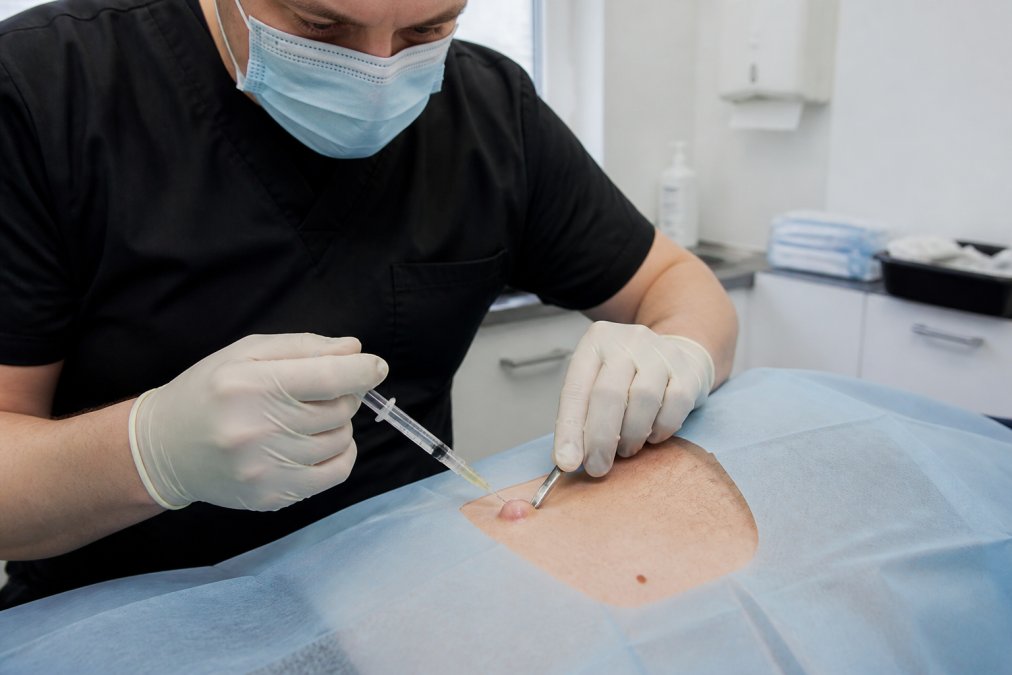
Most people live with sebaceous cysts without issue for years. The real decision comes when a cyst becomes inflamed, infected, cosmetically bothersome, or catches on clothing. At that point, two main treatment paths emerge: incision and drainage, which provides temporary relief, or surgical excision, which removes the entire cyst permanently.
Sebaceous cysts are benign growths filled with keratin. They’re harmless until they become infected or cosmetically concerning, then you need to decide between temporary drainage or permanent removal.
Sebaceous Cyst Removal vs Drainage: Quick Comparison
The choice between sebaceous cyst removal and drainage comes down to one fundamental question: do you want the problem solved permanently, or do you need immediate relief from pain and pressure?
Incision and drainage addresses the acute problem. A clinician makes a small cut, lets the infected material drain, and you feel better within hours. The cyst wall remains, though, so recurrence is common, studies suggest rates between 40-50% when drainage is used alone.
Surgical excision removes the entire cyst, including the fibrous capsule that defines its boundary. This takes slightly longer and leaves a small scar, but recurrence rates drop dramatically to around 5-10%. For most people who want the cyst gone for good, excision is the definitive answer.
| Aspect | Incision and Drainage | Surgical Excision |
|---|---|---|
| Time to relief | Hours | Days (post-op swelling subsides) |
| Recurrence rate | 40-50% | 5-10% |
| Scarring | Minimal | Small, permanent scar |
| Best for | Acutely infected cysts | Definitive, permanent removal |
| Procedure time | 10-15 minutes | 20-30 minutes |
| When to use | Urgent pain management | Long-term solution |
If you choose drainage for an infected cyst, budget for excision down the road if you want to prevent recurrence. Treating it in one session with excision saves time and avoids a second procedure.
If your cyst is actively infected and painful, drainage provides immediate relief. But plan for excision later if you want to prevent recurrence. One-session excision saves time and avoids a second procedure.
Incision and Drainage Explained
Incision and drainage is a straightforward procedure designed to relieve pressure and pain from an infected or inflamed sebaceous cyst. A clinician injects local anaesthetic around the cyst, makes a small incision, and allows the accumulated pus, fluid, and keratinous material to drain. The procedure typically takes 10-15 minutes and provides immediate symptomatic relief.
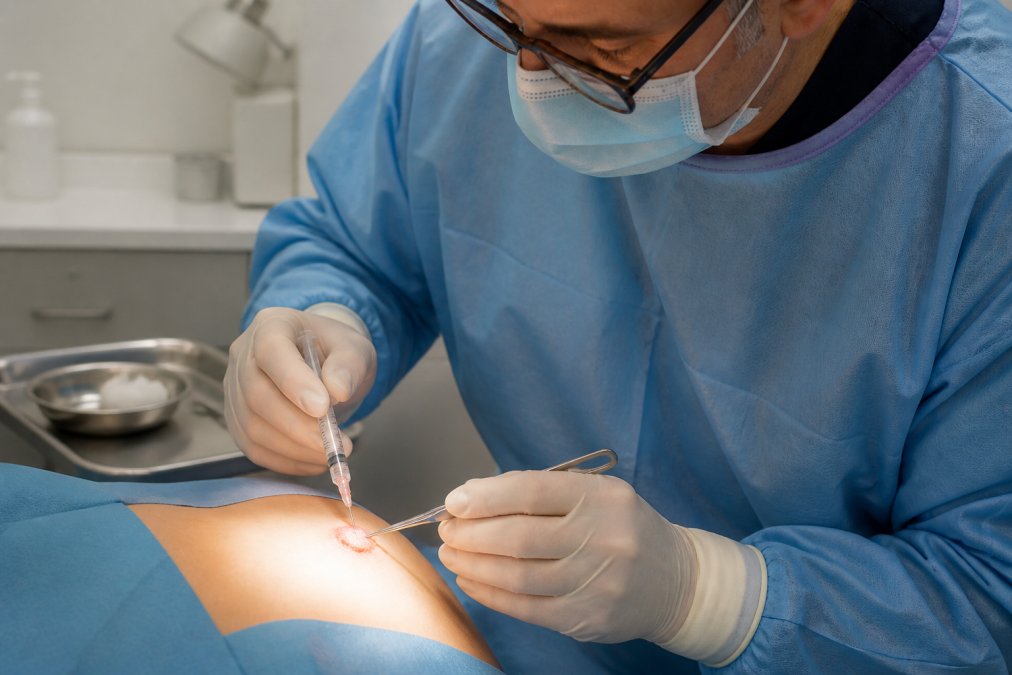
When a cyst becomes infected, pressure builds rapidly, causing pain, redness, and swelling. Drainage decompresses the cyst immediately, reducing inflammation and discomfort. Most patients report feeling significantly better within hours.
However, incision and drainage has a critical limitation: it doesn’t remove the cyst wall itself. The keratinous sac remains intact beneath the skin, which is why recurrence rates are high. The cyst often refills over weeks or months. After drainage, antibiotics are often prescribed if infection is present. The small wound heals quickly, usually within 1-2 weeks, with minimal scarring.
When Drainage Is Appropriate
Drainage is the right choice when your cyst is acutely infected, red, swollen, tender, and draining spontaneously. It provides urgent relief when you can’t comfortably wait weeks for a surgical appointment. Drainage also makes sense if you need quick symptomatic relief while planning more definitive treatment later, or if you have medical contraindications that make anaesthesia risky.
Think of drainage as a bridge treatment, not an endpoint. It buys you time and comfort while you arrange for proper excision if recurrence becomes a problem.
Surgical Excision Explained
Surgical excision is the gold standard for permanent sebaceous cyst removal. A surgeon makes an incision over the cyst, carefully dissects the cyst wall away from surrounding tissue, and removes it completely, including the fibrous capsule. This addresses the root cause and dramatically reduces recurrence risk.
The procedure is performed under local anaesthetic, usually taking 20-30 minutes depending on cyst size and location. The surgeon may use wide excision, where they remove a small ellipse of skin surrounding the cyst to ensure complete removal of the cyst wall, or minimally invasive techniques using a smaller incision.
Complete removal of the cyst wall is what separates excision from drainage. When the entire keratinous sac is gone, the cyst cannot refill. Recurrence rates are typically 5-10%, accounting mainly for cases where a tiny fragment of cyst wall is inadvertently left behind.
The trade-off is scarring. An excision wound requires stitches and leaves a permanent scar that fades over months and usually becomes quite inconspicuous, especially if the incision is made along natural skin lines.
If the cyst is actively infected at the time of excision, there’s a higher risk of wound infection and delayed healing. Most surgeons prefer to drain an infected cyst first, allow the infection to clear with antibiotics, and then perform excision 2-4 weeks later when the tissue is healthier.
Sebaceous Cyst Excision Recovery Time
Recovery after surgical excision is straightforward for most people. Swelling, bruising, and mild discomfort peak around 24-48 hours and gradually improve over the following week.
Most people can return to light activities and desk work within 2-3 days. Strenuous exercise, heavy lifting, and contact sports should be avoided for at least 1-2 weeks to prevent wound disruption. Stitches are typically removed 7-10 days after surgery, depending on location. Facial wounds often heal quickly with stitches removed in 5-7 days, while body wounds may take the full 10 days.
Scar maturation is the longer process. For the first 2-3 weeks, the scar is red and slightly raised. Over the next 3-6 months, it gradually pales and flattens as collagen remodels. By 12 months, most surgical scars are significantly less visible.
Sun exposure darkens healing scars. Use SPF 30+ sunscreen on the wound for at least 6 months post-operatively to minimise pigmentation and keep the scar as pale as possible.
Risks of Draining a Cyst at Home
Attempting to drain a sebaceous cyst at home is tempting when it’s painful and infected, but it carries genuine risks that outweigh the convenience.
The primary danger is incomplete drainage and infection. A cyst wall is fibrous and tough; squeezing or lancing it at home rarely empties it completely. Partial drainage leaves behind infected material that can reaccumulate within days, and you’ve introduced bacteria into a wound without sterile technique. The result is often a worse infection, sometimes requiring antibiotics and clinical intervention anyway.
Scarring from home drainage is often worse than from professional treatment. An uncontrolled incision made with a non-sterile instrument can be jagged and irregular. If infection develops, the inflammatory response is more pronounced, leading to more noticeable scarring.
There’s also the risk of damaging surrounding structures. Sebaceous cysts can be deceptively deep, and aggressive squeezing can injure blood vessels, nerves, or deeper tissue. A cyst on the face or neck carries particular risk because important structures lie close beneath the skin.
Infection is the most common complication of home drainage. Once bacteria colonise the wound, you may develop cellulitis or abscess formation, both requiring antibiotics and possibly emergency care. A 15-minute appointment with a clinician is far safer and often faster than managing complications from a home attempt.
Private vs NHS Cyst Removal
The choice between private and NHS treatment for sebaceous cyst removal is increasingly about waiting time and appointment flexibility rather than clinical quality.
On the NHS, sebaceous cyst removal is classified as a minor surgical procedure, typically available through your GP or a local minor injuries clinic. The clinical care is excellent, but routine, non-urgent cyst removal often has a waiting list of several weeks to months, depending on your region.
Private clinics offer appointments within days rather than months. You pay out of pocket, but you control the timeline. MMS Clinic specialises in minor surgery including sebaceous cyst removal, with appointments available face-to-face in Coventry or online consultations for patients across England. The clinic operates with GMC-registered GPs performing procedures under local anaesthetic on site, with no NHS waiting list.
Cost is the trade-off. Private procedures typically cost more than the NHS (which is free at point of care), but the faster access often justifies the cost for people who can’t wait months or need the procedure done on their schedule. Quality-wise, both settings use the same techniques and sterile protocols. The difference is speed, convenience, and continuity of care.
Private cyst removal suits people who need the procedure within days, prefer continuity with the same clinician, or want to avoid NHS waiting lists. NHS removal is appropriate if you can wait several weeks to months and want no out-of-pocket cost.
Key Differences: Recurrence Rates and Long-Term Outcomes
The most important long-term difference between drainage and excision is recurrence. Incision and drainage has a recurrence rate of 40-50%, meaning nearly half of all drained cysts refill or redevelop within 12-24 months. The cyst wall is still present, and the keratinous material regenerates.
Surgical excision has a recurrence rate of 5-10%. The dramatic difference comes from complete removal of the cyst wall. Once the fibrous capsule is gone, the cyst cannot refill.
The difference compounds over time. A person who chooses drainage may end up having the procedure done multiple times, first drainage, then months later excision after recurrence. That’s two procedures, two anaesthetics, two recovery periods, and potentially two scars. Choosing excision upfront costs one procedure and one recovery.
For people concerned about appearance, a single, planned excision with a scar along a natural line often looks better long-term than multiple procedures on the same cyst.
Drainage solves the immediate problem but leaves the cyst wall, leading to 40-50% recurrence. Excision removes the entire cyst, reducing recurrence to 5-10% and providing a permanent solution. Plan accordingly: drainage is a bridge; excision is the endpoint.
Choosing between sebaceous cyst removal and drainage depends on your situation and timeline. If your cyst is acutely infected and painful, drainage provides urgent relief. But if you want the problem solved permanently, surgical excision is the definitive answer with dramatically lower recurrence rates.
At MMS Clinic, our GMC-registered GPs perform both procedures under local anaesthetic at our Coventry clinic or via secure online consultations for patients across England. We can assess your cyst, discuss whether drainage or excision is appropriate for your case, and schedule the procedure within days, no NHS waiting list. Book a free discovery call to discuss your options with one of our doctors.
Frequently Asked Questions
Will a GP drain a sebaceous cyst?
Yes, a GP can perform incision and drainage for an infected sebaceous cyst under local anaesthetic. This procedure relieves pain and pressure from acute inflammation or abscess formation. However, drainage alone does not remove the cyst wall, so recurrence is common. For a permanent solution, surgical excision is needed. Your GP can refer you to a dermatologist or minor surgery clinic if complete removal is preferred.
Why does a sebaceous cyst keep coming back after drainage?
Incision and drainage removes only the cyst contents, not the keratinous sac or cyst wall itself. Because the underlying cyst structure remains, it can refill with keratin material, leading to recurrence. Surgical excision removes the entire cyst capsule, significantly reducing recurrence risk. If your cyst has returned after drainage, excision is the more definitive treatment option.
What are the main risks of draining a cyst at home?
Attempting home drainage risks serious infection, scarring, incomplete drainage, and damage to surrounding tissue. Without sterile technique, you risk introducing bacteria into the wound, leading to abscess formation or cellulitis. Home drainage also leaves the cyst wall intact, guaranteeing recurrence. Always seek professional medical care; a GP or minor surgery clinic can perform safe drainage under local anaesthetic with proper infection control.
How long does recovery take after sebaceous cyst excision?
Most patients resume normal activities within a few days after surgical excision. The wound typically heals within 7-10 days, and sutures are removed at that point. Complete healing of the deeper tissue takes 4-6 weeks. Strenuous exercise and heavy lifting should be avoided for 2-3 weeks. Scar maturation continues for several months; the appearance improves gradually over time with proper wound care.
Is it worth getting a sebaceous cyst removed if it's not infected?
A non-infected sebaceous cyst does not pose a health risk and removal is optional. However, removal may be worthwhile if the cyst is cosmetically bothersome, in a location prone to irritation, or if you prefer a permanent solution over the risk of future infection. Surgical excision offers the lowest recurrence rate and can be performed quickly under local anaesthetic. Your doctor can advise whether removal suits your situation during a consultation.
This article was written using GrandRanker