
Table of Contents
- What Is Tennis Elbow and Why Steroid Injection Matters
- How Steroid Injections Work for Tennis Elbow
- How Long Does a Steroid Injection Last for Tennis Elbow
- Side Effects of Elbow Steroid Injections
- Recovery Time After Tennis Elbow Injection
- What to Avoid After Your Injection
- When to Consider Alternative Treatments
- Conclusion
Last Updated: August 17, 2026
What Is Tennis Elbow and Why Steroid Injection Matters
Tennis elbow, medically known as lateral epicondylitis, is a painful condition affecting the outer elbow where forearm muscle tendons attach to the bone. Despite its name, you don’t need to play tennis, repetitive gripping, twisting, or forceful arm movements from any activity can trigger inflammation. Pain radiates from the outer elbow down the forearm, worsening with gripping or lifting.
A steroid injection for tennis elbow delivers anti-inflammatory medication directly to the affected area, reducing pain and swelling faster than oral medications. This targeted approach allows faster return to normal activities without extended downtime.
At MMS Clinic, we see patients regularly who’ve struggled with tennis elbow for weeks or months after trying rest, ice, and over-the-counter pain relief without lasting improvement. A steroid injection for tennis elbow can provide meaningful relief, especially when combined with proper rehabilitation. The procedure is quick, minimally invasive, and performed under local anaesthetic by GMC-registered GPs.
Understanding how steroid injections work, how long relief lasts, recovery expectations, and when alternative treatments might be worth considering helps you make an informed decision about whether this treatment suits your situation.
Tennis elbow develops gradually from repetitive strain, not a single injury. Early intervention with conservative treatment often prevents the need for injections, but once chronic inflammation sets in, anti-inflammatory medication delivered directly to the site can break the cycle more effectively than rest alone.
How Steroid Injections Work for Tennis Elbow
A steroid injection for tennis elbow delivers corticosteroid medication directly into the inflamed tissue surrounding the lateral epicondyle. The steroid acts as a potent anti-inflammatory agent, reducing swelling and suppressing the inflammatory response that triggers pain.
Inflammation causes the pain and functional limitation in tennis elbow. Corticosteroids inhibit the production of inflammatory mediators, chemical messengers that signal pain and recruit immune cells to the area. By reducing this inflammatory cascade, the injection provides relief lasting from weeks to several months, depending on individual factors and severity.
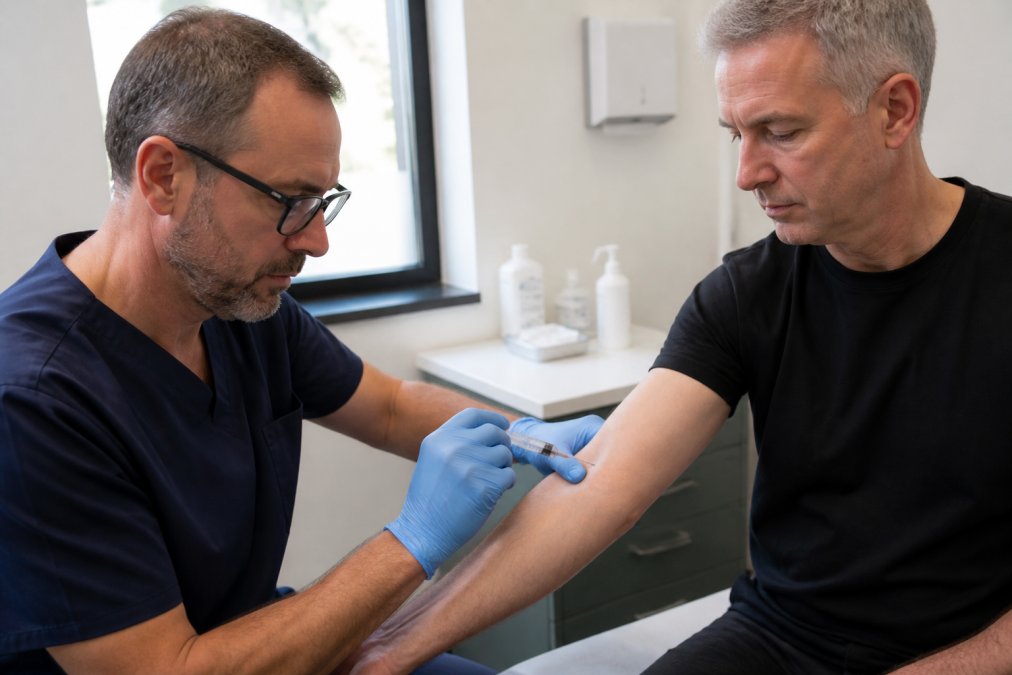
Ultrasound guidance is a method for administering a steroid injection for tennis elbow. The ultrasound image allows the clinician to visualize needle placement in real time, ensuring medication reaches the exact site of inflammation. This precision maximizes therapeutic effect while minimizing risk of missing the target or damaging surrounding structures.
The injection typically includes a local anaesthetic alongside the steroid. The anaesthetic provides immediate numbing within minutes, while the steroid’s full anti-inflammatory effect develops over several days to two weeks. Many patients experience noticeable improvement within the first week, with maximum benefit emerging after 10-14 days as inflammation subsides.
A steroid injection for tennis elbow concentrates anti-inflammatory action at the problem site, delivering higher local concentration than oral medications achieve. This targeted delivery often produces faster and more pronounced relief, particularly when inflammation is severe or chronic.
The steroid doesn’t repair the tendon itself; it reduces the inflammatory response that causes pain and prevents normal function. Once inflammation subsides, physiotherapy becomes crucial for rebuilding strength and preventing recurrence.
How Long Does a Steroid Injection Last for Tennis Elbow
The duration of relief from a steroid injection for tennis elbow typically ranges from 6 weeks to 6 months. Severity of underlying tendinopathy, whether you continue aggravating activities, adherence to physiotherapy, and individual inflammatory response all influence how long benefit persists.
Most patients report meaningful pain reduction within the first two weeks, with peak relief occurring around week three to four. This window of reduced pain creates an ideal opportunity to begin or intensify physiotherapy exercises, which is critical for long-term recovery.
Long-term outcomes depend heavily on post-injection activity. Patients who return immediately to activities that caused the injury without modifying technique, intensity, or frequency often see symptoms return as inflammation redevelops. Those who use the pain-free period to strengthen forearm muscles, improve movement patterns, and gradually return to activity tend to experience more durable relief.
Some patients require a second injection if symptoms recur after the first wears off. Clinical guidelines suggest limiting steroid injections to two or three per year in the same joint to minimise cumulative tissue damage risk.
Repeated steroid injections to the same area carry a small risk of tissue atrophy and tendon weakening over time. If you require more than two injections within 12 months, [alternative treatments](/how-to-treat-frozen-shoulder/) or more aggressive rehabilitation should be considered.
Side Effects of Elbow Steroid Injections
Steroid injections are generally well tolerated, but like any medical procedure, they carry potential side effects. Understanding these risks helps you weigh benefits against drawbacks.
Local side effects at the injection site are most common. Temporary pain or discomfort immediately after injection is normal and usually resolves within hours. Mild swelling or bruising typically subsides within days. Infection is rare when performed under sterile conditions, but signs include increasing pain, warmth, redness, or discharge.
Tissue atrophy is a specific concern with repeated injections. Corticosteroids can cause localised fat and collagen breakdown, manifesting as a small depression at the injection site. While usually cosmetically minor and asymptomatic, this underscores why limiting injections to a few per year is important.
Systemic side effects are uncommon with a single local injection because steroid concentration in the bloodstream remains low. Some patients report mild symptoms like flushed skin, temporary mood changes, or slight insomnia for a day or two, typically minor and short-lived.
Allergic reactions to the steroid or local anaesthetic are rare but possible. Inform your clinician of any known allergies before the procedure. Patients with uncontrolled diabetes, active infection, or bleeding disorders may not be suitable candidates.
A small percentage of patients experience temporary pain flare 24-48 hours after injection, sometimes called a post-injection reaction. This typically resolves with ice and over-the-counter pain relief and doesn’t indicate treatment failure.
Recovery Time After Tennis Elbow Injection
Recovery after a steroid injection for tennis elbow is generally rapid. Most people can return to light daily activities immediately, though you should avoid strenuous use of the injected arm for at least 24-48 hours to allow medication to take effect and minimise inflammation.

The first 48 hours post-injection are critical. Rest during this period allows anti-inflammatory medication to work without competing stimulus of repeated strain. Apply ice for 15-20 minutes several times daily to manage post-injection swelling. Avoid heavy lifting, forceful gripping, or repetitive arm movements for at least one week.
Pain relief typically begins within days, with maximum benefit emerging over 10-14 days as inflammation fully subsides. During this window, physiotherapy becomes essential. Your physiotherapist will design a programme focused on gentle stretching, gradual strengthening, and movement re-education. Starting these exercises early, once acute pain has settled, accelerates functional recovery and reduces recurrence risk.
Full recovery, defined as returning to normal strength and function without pain, usually takes 6-12 weeks when combined with consistent physiotherapy. You may feel ready to resume normal activities much sooner as pain diminishes. Progress gradually: light activities first, then moderate intensity, then full return to sport or demanding work.
Some patients experience temporary increased pain or stiffness 24-48 hours after injection. This post-injection reaction typically resolves quickly. Continuing gentle movement and ice usually manages it effectively.
The injection provides the pain relief window, but physiotherapy provides the cure. Patients who skip rehabilitation often see symptoms return when the injection’s effect wears off. Those who commit to structured rehabilitation tend to achieve lasting improvement.
What to Avoid After Your Injection
The 48 hours immediately following your injection are crucial. Avoid heavy lifting, forceful gripping, and repetitive arm movements that stress the injected tendon. Postpone weightlifting, intense tennis, racquet sports, or occupations requiring sustained gripping or twisting.
Heat should be avoided for the first 48 hours, as it can increase inflammation and swelling. Ice is preferable during this acute phase. After 48 hours, heat can benefit stiffness, but continue avoiding aggravating activities.
Don’t ignore pain signals. Some discomfort is normal, but sharp or worsening pain suggests you’re doing too much too soon. Scale back activity intensity and duration until pain settles.
Avoid non-steroidal anti-inflammatory drugs (NSAIDs) like ibuprofen for at least 48 hours after injection, as they can interfere with the inflammatory response the steroid is modulating. After 48 hours, NSAIDs are generally safe if needed, though paracetamol is a reasonable first choice.
Minimise alcohol consumption for at least 24 hours post-injection, as it can increase bruising and swelling, particularly if you took NSAIDs or anticoagulants before the procedure.
Skipping physiotherapy is perhaps the most common mistake. The injection addresses inflammation, but physiotherapy addresses the underlying weakness and movement dysfunction that caused the problem. Without rehabilitation, recurrence is common once the injection’s effect wears off.
When to Consider Alternative Treatments
A steroid injection for tennis elbow works well for many people, but it’s not the only option. Understanding alternatives helps you make a decision aligned with your goals and circumstances.
Conservative management, rest, ice, physiotherapy, ergonomic modification, and activity adjustment, resolves most cases of tennis elbow within 3-6 months if started early. If you’ve had symptoms for only a few weeks and haven’t tried structured physiotherapy, that’s a logical first step before considering injection.
Platelet-rich plasma (PRP) injections represent an alternative to corticosteroids. PRP is derived from your own blood and contains growth factors that may promote tendon healing rather than simply reducing inflammation. Some research suggests PRP may offer more durable relief than steroids, particularly for chronic cases, though evidence remains mixed. PRP is typically more expensive and less widely available.
Hyaluronic acid injections are another option used in some clinics. Hyaluronic acid may provide lubrication and reduce friction within the tendon sheath, potentially offering pain relief through a different mechanism than steroids. Like PRP, it’s less established and may carry higher costs.
Extracorporeal shock wave therapy (ESWT) uses sound waves to stimulate healing in damaged tendons. It’s non-invasive with minimal side effects, but evidence for effectiveness in tennis elbow is inconsistent, and it’s not widely available.
Surgery is reserved for cases failing conservative management and injection therapy over 12-18 months. Surgical options include releasing the affected tendon or removing degenerative tissue. Surgery offers potential long-term relief but carries greater risks and longer recovery than injection.
The decision between these options depends on symptom duration, severity, functional goals, and individual factors. A consultation with a qualified clinician can help determine which approach suits your specific situation.
A steroid injection for tennis elbow is ideal for people with moderate to severe pain who want rapid relief, have failed conservative management, and are willing to commit to physiotherapy during recovery. It’s less suitable for very early-stage cases (less than 4 weeks of symptoms) or for patients unwilling to modify activity or pursue rehabilitation.
Conclusion
A steroid injection for tennis elbow can provide meaningful pain relief and functional improvement, particularly when combined with structured physiotherapy and activity modification. The procedure is quick, minimally invasive, and offers a practical middle ground between conservative management and surgery for many patients.
At MMS Clinic, our GMC-registered doctors perform steroid injections for tennis elbow with precision and care, ensuring accurate placement and optimal outcomes. We combine injection therapy with detailed rehabilitation guidance to maximise long-term recovery. If you’ve struggled with tennis elbow pain and want to explore whether injection therapy is right for you, a consultation with our experienced team can clarify your options. Contact MMS Clinic for a free discovery call to discuss your symptoms and determine the best treatment pathway for your situation.
| Treatment Option | Best For | Typical Duration | Key Consideration |
|---|---|---|---|
| Conservative management | Early-stage or mild symptoms | Variable; 3-6 months typical | Requires patience and consistent physiotherapy |
| Steroid injection | Moderate to severe pain; failed conservative care | 6 weeks to 6 months | Effectiveness depends on post-injection rehabilitation |
| PRP injection | Chronic cases; preference for biological healing | 3-6 months; potentially longer | Higher cost; less established evidence |
| Hyaluronic acid injection | Chronic inflammation; preference for alternative to steroids | 2-4 months | Emerging evidence; variable availability |
| Surgery | Persistent symptoms after 12-18 months of other treatments | Long-term; requires 3-6 month recovery | Reserved for refractory cases; greater risk profile |
Frequently Asked Questions
How quickly will a steroid injection help tennis elbow?
Most patients experience some relief within 48 to 72 hours, with maximum benefit typically seen within 2 to 4 weeks. The anti-inflammatory effect of the steroid injection reduces swelling around the extensor tendons, which gradually improves pain and function. Individual responses vary depending on the severity of lateral epicondylitis and how well you follow post-injection activity modifications.
How long does a steroid injection last for tennis elbow?
Steroid injections typically provide relief for 3 to 6 months, though some patients benefit for longer. The duration depends on factors such as the severity of tendon degeneration, your activity level after injection, and how well you engage in physiotherapy. If symptoms return, a repeat injection may be considered, though clinical guidelines generally recommend spacing injections several months apart.
What are the side effects of elbow steroid injections?
Local side effects are most common and include temporary increased pain at the injection site, mild swelling, and bruising. Systemic effects are rare but may include a temporary rise in blood sugar or mood changes. Potential long-term risks include local tissue atrophy if multiple injections are given to the same area. A qualified doctor will discuss individual risk factors during your consultation before proceeding.
What should I avoid doing after a steroid injection in the elbow?
Avoid heavy lifting, gripping, and repetitive elbow movements for at least 48 hours post-injection. Rest the arm and apply ice to reduce inflammation. Do not return to the activity that caused tennis elbow immediately; instead, follow a gradual rehabilitation programme with physiotherapy. Avoid taking non-steroidal anti-inflammatory drugs (NSAIDs) for the first 48 hours, as they may interfere with the injection's anti-inflammatory effect.
This article was written using GrandRanker